Chuck Berry Quotes
The gateway to freedom...was somewhere close to New Orleans where most Africans were sorted through and sold. I had driven through New Orleans on tour and I'd been told my great grandfather had lived way back up in the woods among the evergreens in a log cabin. I revived the era with a song about a coloured boy named Johnny B. Goode. My first thought was to make his life follow as my own had come along, but I thought it would seem biased to white fans to say 'coloured boy' and changed it to 'country boy'.
Berry, Chuck. Chuck Berry: The Autobiography. Harmony Books, 1987, p. 141.


Charleston was in the Southern part of the state where most people supported slavery. Douglas made an unequivocal pitch for the racist vote {600060} and forced Lincoln to take a stand. Like many politicians today, Lincoln decided to give the audience what they wanted to hear. It is not clear whether or not he ever believed this statement or was just pandering in a political campaign. He had never said this in the Northern part of the state of before. Lincoln’s views on race changed and matured over the years, culminating in the Emancipation Proclamation. Lincoln lost the Senate seat to Douglas.

Blacks were fighting and dying in WWII. They were equal when they were under fire, but otherwise not. The war was against fascist protagonists whose creed was inequality while the allies were upholding freedom and equality. But making that aspiration a reality was difficult.


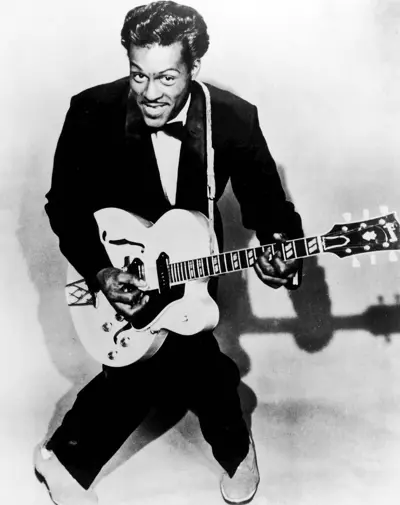
Charles Edward Anderson Berry was an American singer, songwriter and guitarist, and one of the pioneers of rock and roll music. Nicknamed the "Father of Rock and Roll", Berry refined and developed rhythm and blues into the major elements that made rock and roll distinctive with songs such as "Maybellene" (1955), "Roll Over Beethoven" (1956), "Rock and Roll Music" (1957) and "Johnny B. Goode" (1958). Writing lyrics that focused on teen life and consumerism, and developing a music style that included guitar solos and showmanship, Berry was a major influence on subsequent rock music.
