Daniel Patrick Moynihan Quotes
We have had on our desks 800-, 900-, and 1,000 page bills. Nobody knows what was in them. No one had read them. No one could.
Daniel P. Moynihan, Chief American Delegate to the United Nations, U. S. Senator (Democrat, NY), Interview with Peter Jennings, Civilization, August / September 1999
Sourced by: Eigen's Political and Historical Quotations

In general, there are so many versions of a bill as it goes through the Congressional process, that the members of Congress do not read each and every draft. Some do not read any of the drafts and leave it to the Committee; others trust their staffs or their party leadership. More often they trust the lobbyists who donate to their campaigns. Sometimes, the bills are so large—many thousands of pages that the members of Congress lose track of all the aspects of the proposed law and only read a few sections in which they may have participated in debate. Often, the only people who read the entire bill are the lobbyists and one or two of committee staff.

At the time, most members never read the bills they voted on, though some tended to read earlier versions. The bills were very long—sometimes as long as 2000 pages. Usually a few members of Congress worked with Congressional Staffs and lobbyists to finalize bills. It was believed that the lobbyists were the only people who read the entire bills in all their versions.


Alluding to Congress's common practice of exempting itself and its members from many laws they impose on everyone else:


Referring to a new, complex tax bill that Congress had just passed:

For complex legislation, there are very few members of Congress who vote on the legislation who could honestly say that they have read the entire bill. Breyer and many others do not see this as a major problem; many others consider it a disgrace that members of Congress will vote for or against a law that they have not even read.


The bills and legislative processes in Congress had become so large and convoluted that literally members of Congress either voted on bills that were so lage that they rarely read the entire bill or on procedures so arcane that the members could not determine ehate they were voting for. As a result most just followed the lead of their party's Congrssional Leadership.

He was commenting to a simple, minimal, bipartisan bill he had cosponsored to provide justice and fairness to the "dreamer" immigrants.

This is an important political quotation because it illustrates one of the major reasons that Congress was so gridlocked at the time and passed hardly any legislation at all. Farenthold was a relatively new Congressman supported by the Tea Party extreme conservatives. He had no Congressional legislative experience and viewed the House / Senate Conference Committee process more like a Middle East rug bazaar than a serious democratic process of constructive legislation. The position that he wants to take to the Conference Committee which is “livable” to him is not only unlivable to the majority of the Senate, but unlivable for a large part of his own House of Representatives, His position is so extreme that most Senators and many House members on the Conference Committee do not even bother to attempt to negotiate from there. Experienced Congressional legislators realize that negotiation can only take place between realistic options. Otherwise no legislation gets passed which was at that time, OK with most of the Tea Party supporters.


Sherman was a member of the House Finance Committee that would have to initiate any tax bill. Most of the Republicans of that time had signed a pledge to have no new taxes and that was interpreted as no closing of tax loopholes. So they blocked all attempts at closing tax loopholes when they controlled the house or had a filibuster minority of the Senate. However in the few years that they did not, the Democrats had “more important” legislation like health care reform that they wanted to use their majority position for. The result was no closure of tax loopholes—even the egregious ones that a majority of Congress wanted closed and almost all the people did. The particular Congress when Sherman made this statement was the worst Congress in American History in terms of the few laws that the polarized Congress could pass.

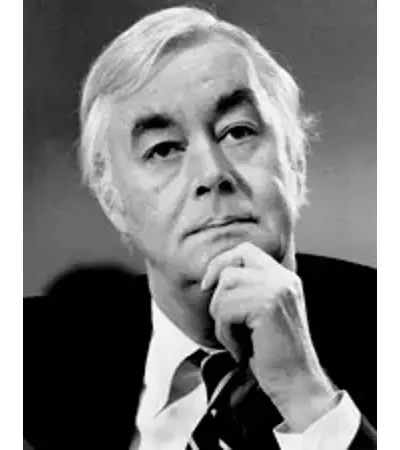
Daniel Patrick "Pat" Moynihan was an American politician, sociologist, and diplomat. A member of the Democratic Party, he represented New York in the United States Senate and served as an adviser to Republican U.S. President Richard Nixon.
