Arlen Specter Quotes
Congress leaks. That’s a fact of life.
Arlen Specter, 1930-2012, U. S. Senator (Republican, PA), Interview, NBC Meet the Press, February 5, 2006
Sourced by: Eigen's Political and Historical Quotations


The George W. Bush White House which had tried to keep secret things that no other administration in history had attempted found itself in the position where it was leaking secret classified information. A Key staff member of the administration was indicted for covering up their leaking activities of secret material.


The “gentleman” was a member of Congress. This is an issue between the Congress and the Executive Branch which has existed as long as our Republic: Whether all members of Congress should have access to all classified secret information of the Government. Mrs. Roosevelt who was usually an advocate of transparency, on this issue tended to side with the argument of the executive branch. Note that the arguments made in 1939 are still fought over today.


Senator Dianne Feinstein, Chairman of the Senate Intelligence Committee, had released an unclassified Summary of the Committee Report on the CIA using torture and perverse treatment of suspect terrorists in the aftermath of the 9-11 attack on New York. Most Republicans argued vehemently that the Report should be classified and kept secret as the CIA behavior was so egregious, unpalatable, and morally reprehensible that there would be negative consequences including perhaps demonstrations and attacks against Americans in foreign countries. Moreover, Terrorist organizations would use the heinous CIA behavior as a recruiting tool for anti-American terrorists. McCain, who had himself been the victim of North Vietnamese torture cited the moral and ethical reasons to prohibit torture but also explained what has been proven over and over again that torture victims will tell the torturer any nonsense that they think the torturer might believe just to get obtain relief from the agony of the torture.

Every military establishment has secrets that they should maintain and are not always forthcoming with facts d explanations. However, the Pentagon is so large with so many layers that there are subgroups and vested interests, prevaricate and lie, even to their own superiors. No one knows how prevalent this is, but there have be a number of major incidents where the were lies and cover-ups—usually to prevent public embarrassment to some element of the military industrial complex.


The George W. Bush Administration had initiated a secret wiretapping program without informing the Congressional Intelligence Committees as required by the statute or requesting a change in the law from the Judiciary Committee. New York Times, however, had discovered the program and published its existence. This was the way that Congress found out about the program that seemed to violate the law. The Attorney General however was critical of New York Times, and expressed concern that the press had published secret material.

Defending his action in prosecuting a newspaper editor and three others for publishing a 'secret' government economic report:


He was referring to the massive surveillance NSA program whereby all telephone calls and most digital communications for every American was secretly tapped and stored in an NSA data base. The Senators of the Intelligence Oversight Committee received information in Classified executive sessions but they were not allowed to disclose anything that they learned in the briefings—even something as huge and probably unconstitutional as this program. Moreover, even when officials of the Intelligence Services lied under oath (see {634917}) in open session, the Senators could not disclose this fact.


The George W. Bush administration used secrecy and classification to an extreme that few previous administrations ever had in modern times.

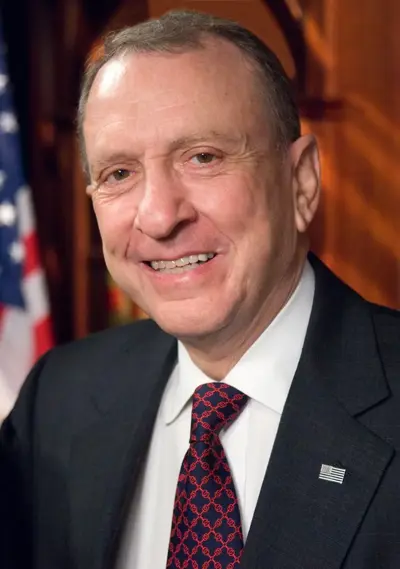
Arlen Specter was an American lawyer, author, and politician who served as a United States Senator from Pennsylvania from 1981 to 2011. Specter was a Democrat from 1951 to 1965, then a Republican from 1965 until 2009, when he switched back to the Democratic Party. First elected in 1980, he represented Pennsylvania in the U.S. Senate for 30 years.
