James Bamford Quotes
I far more trust the press than I do the Administration with judgment of what should be secret and what shouldn’t. How many scandals has the Administration uncovered on its own?
The George W. Bush administration used secrecy and classification to an extreme that few previous administrations ever had in modern times.
James Bamford, Investigative Producer and Journalist, Expert in American Intelligence Agencies, Time, June 26, 2006
Sourced by: Eigen's Political and Historical Quotations


At the time there was no Secrecy & Classification System nor any laws enforcing secrecy or confidentiality. However there was no freedom of information laws of expectations even on the part of journalists. This was the first Freedom of Information policy of the American government. Some politicians were more open than others but there was no national, governmental before this. There were however leakers and whistleblowers though the terms were not in use. Note that Roosevelt herein created the first whistle blower protection—himself.

Senator Dianne Feinstein, Chairman of the Senate Intelligence Committee, had released an unclassified Summary of the Committee Report on the CIA using torture and perverse treatment of suspect terrorists in the aftermath of the 9-11 attack on New York. Most Republicans argued vehemently that the Report should be classified and kept secret as the CIA behavior was so egregious, unpalatable, and morally reprehensible that there would be negative consequences including perhaps demonstrations and attacks against Americans in foreign countries. Moreover, Terrorist organizations would use the heinous CIA behavior as a recruiting tool for anti-American terrorists. McCain, who had himself been the victim of North Vietnamese torture cited the moral and ethical reasons to prohibit torture but also explained what has been proven over and over again that torture victims will tell the torturer any nonsense that they think the torturer might believe just to get obtain relief from the agony of the torture.


The George W. Bush Administration had initiated a secret wiretapping program without informing the Congressional Intelligence Committees as required by the statute or requesting a change in the law from the Judiciary Committee. New York Times, however, had discovered the program and published its existence. This was the way that Congress found out about the program that seemed to violate the law. The Attorney General however was critical of New York Times, and expressed concern that the press had published secret material.


Wikileaks needs whistleblowers to send it confidential and secret material in order to have something that people might be interested in. And then, it needs continuous money donations to keep the website going. This statement refuted critics who claimed that Assange and his colleagues were just criminal activists who had no public support or interest in what they were doing.

The executive order to which this statement referred was the then new President’s first—Executive Order 13489. It was enthusiastically received by the public, historians, researchers and the media. However at the end of Obama’s two administrations, the system was a little better than when George W. Bush, blocked much of the Freedom of Information Act from being implemented. However, the agencies who want to operate in secrecy without having to deal with public criticism, had developed even more sophisticated techniques of avoiding transparency and when they must disclose, they have developed techniques to delay the process, sometimes even for years, while they study whether the material should be disclosed. The president personally declassified a few CIA files from decades ago that the agency maintained should be secret, but he did nothing else systemic so solve the problem of declassifying and material and nothing to control the over classification which virtually everyone agrees is a major problem. More material is being classified than ever.

He was commenting on the new Donald Trump's attacks onthe media.


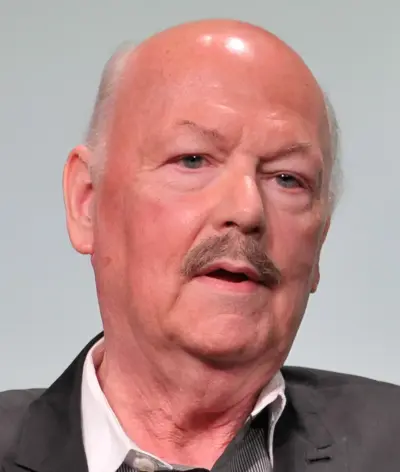
James Bamford is an American bestselling author, journalist and documentary producer widely noted for his writing about United States intelligence agencies, especially the National Security Agency (NSA). The New York Times has called him "the nation's premier journalist on the subject of the National Security Agency" and in a lengthy profile The New Yorker named him "the NSA's chief chronicler." Bamford has taught at the University of California, Berkeley as a distinguished visiting professor and has written for The New York Times Magazine, The Atlantic, Harper's, and many other publications. In 2006, he won the National Magazine Award for Reporting, the highest award in the magazine industry, for his writing on the war in Iraq published in Rolling Stone. He is also an Emmy nominated documentary producer for PBS and spent a decade as the Washington investigative producer for ABC's World News Tonight. In 2015 he became the national security columnist for Foreign Policy Magazine and he also writes for The New Republic. His most recent book, The Shadow Factory: The Ultra-Secret NSA From 9/11 to the Eavesdropping on America, became a New York Times bestseller and was named by The Washington Post as one of "The Best Books of the Year." It is the third in a trilogy by Bamford on the NSA, following The Puzzle Palace (1982) and Body of Secrets (2001), also New York Times bestsellers.
