William O. Douglas Quotes
The secrecy stamp … has been used to withhold information which in 99 ½ percent of the cases would present no danger to national security.
William O. Douglas, 1898-1980, U.S. Supreme Court Justice, Chairman, Security & Exchange Commission, Gravel v. United States, 1972
Sourced by: Eigen's Political and Historical Quotations


He was the Chairman of the Senate Judiciary Committee.


At the time Holland was a republic and a confederation of different states. There was an assembly of delegations from each of the States but most important decisions tended to be made by the Prince and a few of the representatives in his sway. Mathenesse was the delegate of the largest and wealthiest state but even others in his state delegation were out of the loop. Others claimed that the necessity of secrecy was just a pretext for a small group to dominate the republic. See {620069}. This battle goes on in almost every country including the United States where there are many matters in which only a few members of Congress and the President make decisions with national security given as the reason. In many cases there has been such a reason, but it is very easily corrupted into a pretext as only the people on the inside who get to make the decision know what the secret material was.

There are many things about our enemies which they know that we know which are still kept classified because it would be embarrassing for the government, a previous administration or to an agency to reveal it. There are some documents that are classified even thought the enemy knows we have the information because if the document were released the enemy might find out the sources of the information which they do not know. However often they know that too. Potential embarrassment and scandal are the main reasons for keepingthings that the enemy knoews we know secret.

When Bob Casey was the CIA Director, he the declassification of all the operational files of the WWII Office of Strategic Service. The huge collection is referred to as Record Book 2.6
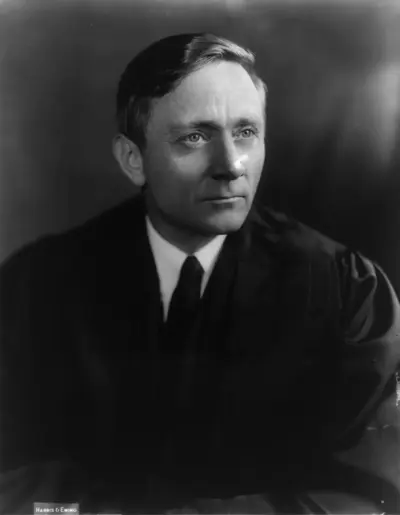
William Orville Douglas was an American jurist and politician who served as an associate justice of the Supreme Court of the United States. Nominated by President Franklin D. Roosevelt, Douglas was confirmed at the age of 40, one of the youngest justices appointed to the court. His term, lasting 36 years and 211 days (1939–75), is the longest in the history of the Supreme Court. In 1975, Time magazine called Douglas "the most doctrinaire and committed civil libertarian ever to sit on the court."
