Robert Toombs Quotes
We had a large common domain, already added by the several States for the common benefit of all; purchase and war might make large additions to this common domain; hence the power over existing and future territories, with the stipulation to admit new States, was conferred.
Toombs, Robert. Speech of Hon. Robert Toombs, Delivered in Milledgeville, on Tuesday Evening, November 13, 1860, Before the Legislature of Georgia. Boughton, Nisbet & Barnes, State Printers, 1860.


Some of the Patriots of Early America realized that the oppressions of British rule were coming from Parliament and initially took the position that only the King could make laws for the colonies and not Parliament. Therefore, they were as Englishmen challenging illegal English laws. Most American hostility was directed at Parliament and not the King. However, once there was any physical resistance, King George came down with such a heavy hand that American hatred transferred to him. For related quotes on the King/Parliament issue, see {639145}, {639144}, {639143}, {639141}, {639140}, & {639137}


This audacious general and Queen of one of the Roman Provinces conquered most of the area including Egypt. Then she declared her independence from the Roman Empire itself. A master of multilateral coalition leading, she was able to attract nearby provinces to join her. The Roman Emperor Aurelian himself set out to subjugate Zenobia—the Roman, Latin name. In the first battle, the Romans won a tactical victory for some territory but lost many men. The Emperor asked Bat Zabbai to surrender, but she refused in this famous reply. She was counting on the fact that the Romans would not accept the high losses she was inflicting. See Aurelian’s letter to the Roman Senate {606345}. The Romans did however did pay the price and eventually conquered Bat Zabbai and brought her to Rome as a captive. However she was very much admired by Roman society and after she pledged to not revolt against Rome, she was allowed to live in Rome—but not go back to Syria where she might raise another army. She became a major celebrity of Roman society and married a Roman Senator. Her exploits although well known at the time lapsed into obscurity in that later Roman Christian society did not see her as a fitting Christian female example, and when Islam developed in Syria, she was not considered a model Muslim woman. So a key figure in Roman history was ignored by most of the cultures until recently where the original documentation of the time has been made more widely available.


Cyrus chose war. But Tomyris and the Massagetai, won and Cyrus was killed in the battle. The famous painter, Rubens, painted the scene of the head of Cyrus being brought to Queen Tomyris.


Xerxes was as the Texans say, “All hat and no cattle.” He had delusions of grandeur and was quite unsuccessful as a conqueror.

Note the perception of Davis, typical of Southerners at the time, that Southerners were being excluded from California. The logic was this: California had many opportunities in land, gold, and other natural resources. Since California had a Constitutional provision against slavery, no Southerner could enter the new state with his slaves without fear of their being set free. If Southerners bought land or wanted to hunt for gold, they could not bring their slaves to do the heavy work. Therefore, they were excluded from the economic growth of the state. The idea of the whites doing the heavy work themselves of traveling without their family slaves was so foreign to the aristocratic planter class, that it was never considered by them as a possibility. Therefore, they were excluded. However, many of the lower class Southerners of all races saw great opportunities in California where they could compete on an equal footing even though they had no slaves or land.
This quotation is a good illustration of a practice that existed in the age of Empire where two or more large powers would agree among themselves as to which one of them had the right to seize a smaller power, not part of the compact.

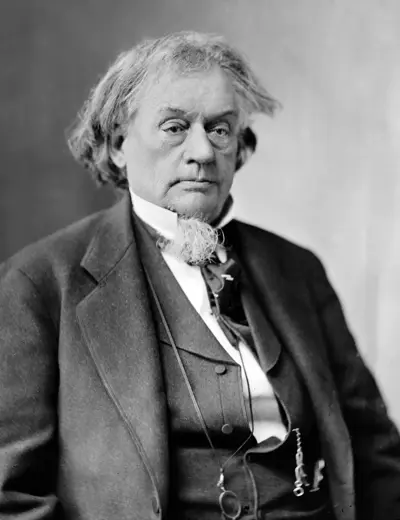
Robert Augustus Toombs was an American lawyer, planter, and national politician from Georgia who became one of the organizers of the Confederacy and served as its first Secretary of State under President Jefferson Davis. He also served in the Confederate States Army, but later became one of Davis' critics. After the Confederate defeat, Toombs fled the United States. He did not return until 1867, after his daughter's death. He regained political power in Georgia as Congressional Reconstruction ended in 1877.
