Kentucky Quotes
the several states who formed that instrument, being sovereign and independent, have the unquestionable right to judge of its infraction; and that a nullification, by those sovereignties, of all unauthorized acts done under colour of that instrument, is the rightful remedy:
Commonly referred to as the Kentucky Resolution. This concept of Nullification was one of the factors that aggravated the tensions leading to the Civil War. Were the individual States to be the arbiters of whether or not a Federal act was Constitutional or was it to be the Supreme Court.
Kentucky, Resolution, December 3rd, 1799
Sourced by: Eigen's Political and Historical Quotations


Soon after Jackson's reelection, delegates from South Carolina, led by John C. Calhoun, moved quickly to declare "null, void, and no law" the Tariff Act of 1832. The president's reaction to the Ordinance of Nullification was swift.


South Carolina did not like the protectionist measures that Congress had passed. Although the Federal Government clearly had the Constitutional authority to regulate interstate and international commerce, South Carolina, led by John C. Calhoun, took the position that any state could nullify a Federal law’s application within their state. Clearly, that was a vision of a nation that would have very different from our history where the Federal Courts were the only institution that could nullify an act of Congress anywhere.


She was always an American optimist. Most of the Southern States did everything possible to try and defy the Supreme Court’s decisions on school segregation and other matters regarding their “traditional rights” to discriminate racially. Entire public school systems closed rather than desegregate. The Civil Rights Act and Voting Rights Act in 1964 made it much more difficult, But change took place inexorably over the next years as the older generation gave way to the new—one that was more educated and better informed as a result of television. Mississippi had more Black elected public officials than white. By the 21st century, there were relatively few areas where the Southern States still tried to evade the Supreme Court.


Martin and other anti-Federalists argued against ratifying the new Constitution as they thought that it was inimical to the state’s interest. The notion of Federalism as a danger to states is clearly stated in this quotation for the debate on Constitutional ratification. Fundamentally, are Senators representatives of their states or of the Federal Government. If the former, who can the senators be recalled or impeached by the states to who the presumably owe their loyalty? This issue, like so many others, was compromised. The States would control the selection and method of selection of the Senators but could not recall or impeach. Looking back, we see this as logically inconsistent. However, looking at it as a political compromise between two legitimate points of view, it seems quite reasonable. Early America was a combination of idealism and pragmatism which has carried throughout American history.


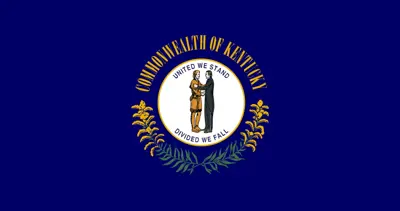
Kentucky (US: /kənˈtʌki/ (listen) kən-TUK-ee, UK: /kɛn-/ ken-), officially the Commonwealth of Kentucky, is a state in the Upland South region of the United States, bordered by Illinois, Indiana, and Ohio to the north; West Virginia and Virginia to the east; Tennessee to the south; and Missouri to the west. The bluegrass region in the central part of the commonwealth contains the commonwealth's capital, Frankfort, as well as its two largest cities, Louisville and Lexington. Together they comprise more than 20% of the commonwealth's population. Kentucky is the 37th most extensive and the 26th most populous of the 50 United States.
