Anne M. Burford Quotes
Washington is too small to be a nation but too large to be an insane asylum.
The same expression was used 124 years earlier referring to South Carolina. See James Louis Petigru.
Anne M. Burford, Administrator, Environmental Protection Agency, Speech, Vail, Colorado, July 27, 1984
Sourced by: Eigen's Political and Historical Quotations


Buchwald himself suffered from depression and was a major spokesperson for mental health reform.


This quotation pithily summarizes a common problem in politics of describing budgets. In most years there has been a national inflation. If a new budget is, in actual dollars, the same as the previous years or a little more, but the increase is less than the inflation level, the agency will not be able to provide the same level of services as the previous year. Therefore services will be cut and those who are politically in favor of more money for the program legitimately describe this as a “budget cut”. Opponents of larger funding increases, also legitimately describe the funding as a “budget increase”. One side refers to what the money can buy and the other, to the absolute dollars spent. This is an example of the classical ambiguity of political oratory.

The Red Scare was at its height and McCarthyism was rampant.


When requested to have the assembly remove items in the proposed constitution at the last minute:

The state tried to nullify a Federal law in the early part of this ordinance {592185}. In this latter part South Carolina threatened to secede if the Federal Government were to try and enforce the tariff. This was their first threat of secession. They did not go through with it, but over 30 years later were the first Southern state to rebel and secede from the Union, The protectionist tariff was instituted to support American domestic manufacturers from competition from England and the rest of Europe. America then was an emerging underdeveloped country, but it would not take too long before America developed the best manufacturing in the world. The South was generally opposed to the tariff as they had little manufacturing to protect, and because of their slave labor system was not interested much in manufacturing, but since they had to pay more for manufactured items, they opposed the tariff. Also the maritime ports of New England who lost the shipping trade from Europe were opposed. Generally the rest of the country favored it. To compromise, the Jackson administration lowered the tariff slightly, but that did not satisfy the opponents, who continued to fight it.


In the early years of the Obama Administration, the minority leader of the Senate declared that the object of the Republicans in the Senate was to prevent Obama from being reelected. Therefore, the Republicans used the filibuster to block virtually all legislation. In 2010, the Republicans gained control of the House of Representatives and would not pass any legislation that the President favored lest he get credit for accomplishing something. It had gotten so bad, that even when the President proposed Republican ideas about which everyone agreed, that too was blocked.


See {598081} for a similar idea expressed by his wife Hillary.


The Kurdish People do not have a homeland of their own but are minorities of other states—mostly in Turkey and Iraq. There was a “Kurdistan” for a few years but it did not last do to major geopolitical forces. Whereas Barzani is opposed to violence, there are other Kurds who have resorted to vicious terrorism in their quest for a homeland. Kurds represent a wide range of opinion on the best way to create a stat of Kurdistan, but they were at the time, almost unanimous on their desire for independence and the belief in their moral right to have a homeland.

There were many national politicians who would publicly castigate homosexuals and yet were themselves gay and in effect were living two lives. For them “coming out of the closet” had a temporary meaning restricted to time and place and then they would go back “in the closet” for their public personae.


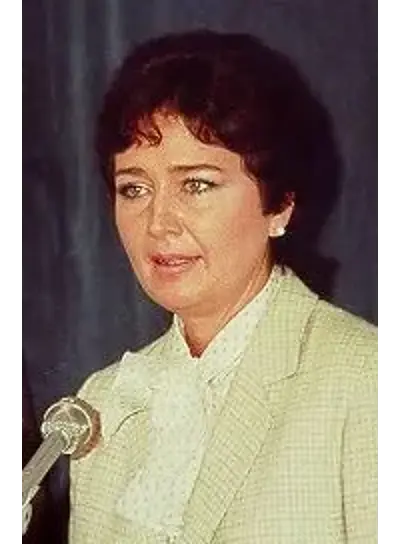
Anne Irene McGill Gorsuch Burford, also known as Anne M. Gorsuch (/ˈɡɔːrsətʃ/), was an American attorney and politician. Between 1981 and 1983, while known as Anne M. Gorsuch, she served under President Ronald Reagan as the first female Administrator of the Environmental Protection Agency (EPA). Her son is current Associate Justice of the Supreme Court Neil Gorsuch.
