Gerald R. Ford Quotes
We . . . declared our independence 200 years ago, and we are not about to lose it now to paper shufflers and computers.
Ford, Gerald R. Public Papers of the Presidents of the United States: Gerald R. Ford, 1976-77. U.S. Government Printing Office, 1979, p. 1821.


At the beginning of July, 1826 Adams, deathly ill, was asked to propose a toast to be given in his name for the coming July 4 celebrations. It was:. On his deathbed four days later he was aroused by the firing of cannon. When told it was Independence Day he murmured:


Compare Abraham Lincoln's Liberty And Union.


In 1837 and 1839 there were insurrections in Lower Canada against British rule. The British put down the rebellions and executed a few of the leaders.

A group of citizens of Mecklenburgh County, NC gathered together and produced their own “Declaration of Independence” a little over a year before The Declaration of Independence of July 4, 1776. Some people refer to the earlier document as the Mecklenburgh Declaration of Independence. It is not known how much Alexander personally wrote however he signed as the Chairman of the convention. The delegates voted to send a copy to the Continental Congress, and the reader will recognize some of the similar language which found its way into the 1776 document. The Mecklenburgh Resolution also contained a structure of government.

He had been King of Portugal and then had come to the Portuguese colony of Brazil where he led a revolution against Portugal, declared independence from the “mother country, and was elected as Emperor of Brazil. The Colony was much larger and richer in natural resources than the “mother country.”


The state tried to nullify a Federal law in the early part of this ordinance {592185}. In this latter part South Carolina threatened to secede if the Federal Government were to try and enforce the tariff. This was their first threat of secession. They did not go through with it, but over 30 years later were the first Southern state to rebel and secede from the Union, The protectionist tariff was instituted to support American domestic manufacturers from competition from England and the rest of Europe. America then was an emerging underdeveloped country, but it would not take too long before America developed the best manufacturing in the world. The South was generally opposed to the tariff as they had little manufacturing to protect, and because of their slave labor system was not interested much in manufacturing, but since they had to pay more for manufactured items, they opposed the tariff. Also the maritime ports of New England who lost the shipping trade from Europe were opposed. Generally the rest of the country favored it. To compromise, the Jackson administration lowered the tariff slightly, but that did not satisfy the opponents, who continued to fight it.


In most revolutionary settings leaders have to persuade people who have voted with no success to turn to the rifle. In Ireland at this point, almost all the nationalsits knew that the rifle would help them but they were not sure that a vote would have the effect of a bullet.


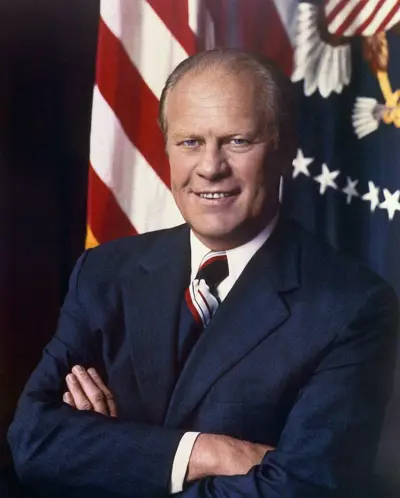
Gerald Rudolph Ford Jr. was an American politician and attorney who served as the 38th president of the United States from 1974 to 1977. A member of the Republican Party, Ford previously served as the 40th vice president of the United States from 1973 to 1974. To date, Ford is the only person to have served as both vice president and president without being elected to either office by the Electoral College.
