John Shimkus Quotes
Various Turkish people invaded southwest Asia during the Middle Ages and carved an empire for themselves from lands occupied by the indigenous Semitic and Indo-European inhabitants.
Shimkus, John. "Commemoration of the Armenian Genocide." Congressional Record, Government Printing Office, 24 Apr. 2002.

Aeneas Sylvius Piccolomini. 6 years earlier, the Ottoman Turks, had captured Byzantium (Constantinople, later Istanbul), the capital of the Eastern Roman Empire. One o the reasons the city fell was the squabbling of the different Christian national armies about support for the city and the internal bickering of those armies and navies that were there. The Emperor, Constantine XI, the successor to Constantine the Great—the roman Emperor who Christianized the Empire, was killed. Emperor Justinian had built the Hagia Sophia—the largest church at the time and for 1000 years thereafter under a single dome, and this great house of Christianity was turned into a Mosque by the Islamic conquerors.

The Ottoman Turks had just conquered the city of Constantinople including the Eastern Roman Empire in their domain. They would be the dominant power in the area until the First World War when they made the mistake of siding with the Germans and the Ottoman Empire was broken up in the Treaty of Versailles.


After King Henry VIII left the Roman Catholic Church and adopted Protestantism, English Protestants were in great danger in Catholic Europe. Queen Elisabeth I, with its traditional trading partners in Catholic Europe too dangerous for English merchants, negotiated successfully with the Ottoman Empire Sultan Murad III, for mutual trading. An Englishman was much safer in the Islamic world than he was in Europe. Not only did England open up new markets but its merchants developed the skills of trading with the East which was one of the main factors allowing them to be so successful in establishing the British Empire which was always fundamentally a trading empire. Elizabeth’s successful foreign policy not only allowed prosperity despite the schism with Europe, but established the foundation for England to become the greatest world power.
At its largest, the Ottoman Turkish Empire included all of the Middle East, most of North Africa, much of Russia, and Europe right up to the walls of Vienna.

The Serbs were in a conflict with the Ottoman Muslims almost 1000 years ago. However, they have never seen that war as having ended. When the Albanian Muslims were breaking from the weakened Ottoman Empire, the Serbs not only wanted to dominate Albania, but also to extract vengeance for alleged wrongs committed by Ottoman Muslims hundreds of years earlier. This attitude existed through and after the Serbian war and the Kosovo Albanian population would not live under Serbian control given the Serb war crimes and atrocities perpetrated on Muslims—not only in the historical past but even in the Serbian War. Tucovic was one of the very few Serbs who not only argued that the Serbian policy of oppression of the Muslims was not only morally wrong but counter productive from the Serbian point of view. For many Serbs, Tucovic was considered a traitor.

He was one of the world’s greatest polymaths who among his other accomplishments was the “Father of Sociology” and was the leading Islamic intellectual of his era.
The Christian Armenians, a minority in Turkey and its lands, were discriminated against like other non Muslim minorities in the Ottoman Empire. But during the Turkish War with Russia and WWI, some Armenians defected and served on the Russian side. Many Turkish citizens took revenge on Armenians by means of murder and torture. Soon, the extermination of the Armenians became the official “Young Turk” government policy. Hundreds of thousands of Armenians were killed outright, and about an equal number were “deported” to special areas. Many died of malnutrition along the forced march of Ethnic Cleansing. Others were murdered as they were deported. No one knows exactly how many Armenians were killed with estimates ranging from ½ million to 4 million. This was the first genocide of the 20th century. Modern Turkish leaders however, are in denial about the Armenian deaths. They claim that there was a war and food was scarce; the only Armenians killed, the claimed were proven Russian agents. They further claim that the Armenian behavior was in large part responsible for the forced deportations because of their lack of patriotism and unwillingness to help the Turkish authorities identify the Russian agents. Most Turks today are unaware of the Armenian Genocide as nothing is taught about the massacres in schools or other institutions. It is against the law in Turkey to even have an intellectual study of the Turkish behavior towards the Armenians, much less publish anything about it.
Mehmet Talaat Pasha. This incredible quotation not only proves Talaat and the Young Turk Government was driving the extermination policy, but also admits that complete genocide was the policy. Talaat’s bizarre logic was this: We have killed so many Armenians that any remaining will certainly want revenge. Therefore, we have to exterminate them all lest they attempt to obtain justice at the expense of the Turks or even exact revenge against the Turks. The U. S. Ambassador was horrified at the Armenian genocide, and was constantly arguing with the Turkish officials to get them to modify their murderous policies. The Christian Armenians, a minority in Turkey and its lands, were discriminated against like other non Muslim minorities in the Ottoman Empire. But during the Turkish War with Russia and WWI, some Armenians defected and served on the Russian side. Many Turkish citizens took revenge on Armenians by means of murder and torture. Soon, the extermination of the Armenians became the official “Young Turk” government policy. Hundreds of thousands of Armenians were killed outright, and about an equal number were “deported” to special areas. Many died of malnutrition along the forced march of Ethnic Cleansing. Others were murdered as they were deported. No one knows exactly how many Armenians were killed with estimates ranging from ½ million to 4 million. This was the first genocide of the 20th century. Modern Turkish leaders however, are in denial about the Armenian deaths. They claim that there was a war and food was scarce; the only Armenians killed, the claimed were proven Russian agents. They further claim that the Armenian behavior was in large part responsible for the forced deportations because of their lack of patriotism and unwillingness to help the Turkish authorities identify the Russian agents. Most Turks today are unaware of the Armenian Genocide as nothing is taught about the massacres in schools or other institutions. It is against the law in Turkey to even have an intellectual study of the Turkish behavior towards the Armenians, much less publish anything about it.

Ataturk wrote this manual personally. Religious Turks took violent offense to Ataturk’s proclamation that Turks were great without Islam.


Turkey, even a century later, takes great offense at the terms “holocaust” or “genocide” to describe the death of so many Armenians. The censor newspapers and jail academics who even want to have conferences to study the question. This is in great contrast to Germany which faced its genocidal killings squarely and built a society and government structure to never forget it and always focus on preventing a reoccurrence,
Ottoman Turkish Sultan Mehmed II Aeneas Sylvius Piccolomini. 6 years earlier, the Ottoman Turks, had captured Byzantium (Constantinople, later Istanbul), the capital of the Eastern Roman Empire. The Pope had called together the rulers and leaders of Christendom to organize a common defense in this war of civilizations. This was the period where Christian Islamophobia began. The Muslims had a religious duty to convert the rest of the world to Islam and adopt Islamic law (Sharia). However, so did the Christians. Sultan Mehmed II, when he conquered Byzantium, did not require the conversion of the Christians in the great city. He took the greatest churches, but by and large left the Christians to worship in their own Churches. The Muslims at the time were far more tolerant of Christians (and Jews) than the Christians were of Muslims (and Jews). Like in the 21st century, there was much Islamic doctrine and reality to be worried about, but not all the Muslims were as rabid and extreme as Eastern paranoia suggested in the 15th century or the 21st.


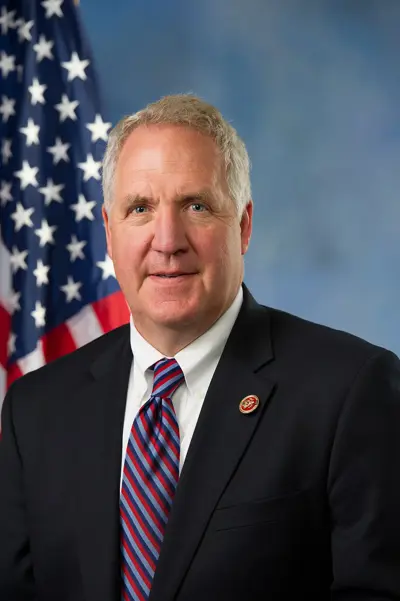
John Mondy Shimkus is an American politician who served as the U.S. Representative for Illinois's 15th congressional district. His district represented much of Southeastern Illinois, and was succeeded by fellow Republican Mary Miller.
