Alice Walker Quotes
To me, Central America is one large plantation; and I see the people's struggle to be free as a slave revolt.
Alice Walker, Novelist, 1988
Sourced by: Eigen's Political and Historical Quotations


The glorious spectacle of eighteen millions of people, struggling to burst their chains and be free.
The entire speech was translated into Spanish and read to great applause to Latin American revolutionary regiments.

Southerners complained that abolitionists were advocating revolution. While most did not, some did advocate mass rebellion. The fact that Remond was himself a Black, created even more distress to the South.

This prophecy written in the later years of Jefferson’s life turned out to be all too true. St. Domingo was an Island in the Caribbean where slavery produced a bloody war. The American Civil War would be far worse.


And as the leader of the exploited, after his revolution he became a dictator himself, albeit a very popular one amongst most Cubans.


The essential conundrum for the Southerners of the Early United States was their independence as individual states vis a vis the trust and dependence that would be required if they gave up much of their traditional authority to manage their own affairs. However, if they chose to maintain States’ rights and other States did as well, they not only lose the security and unity of a nation, but the other states were more economically powerful, better educated, with stronger infrastructures as well. The changing world politics, industrialization, and technology was making it more and more difficult for a Southern State to have it both ways. They could have a loose affiliation of states, maintain their own autonomy but would be saddled with war debt and a slave-dependent economy that was itself deteriorating. Or they would be in a strong union where they were the weaker economic and political forces and might be politically and culturally dominated by states like Pennsylvania, New York and Massachusetts which would force major social and economic reforms upon the South. The knot to which Lee referred was the mythical one so complex that non could untie it, but it could instantly be cut with a sword. Lee argued that the Southern states would have to accept the dominance of the other states (which was like political slavery) or just cut the knot and not ratify the Constitution. More negotiating and trying to untie the knot would be useless.

The description is of the Mexican conquest of Arizona and the Indian revolt. See {612107}

In 1927 there was a Peasant Uprising in the Hunan Province of China. Young Mau went there and wrote a report. Mao and other young communist leaders had a much more acute appreciation of sloganeering than their older revolutionary comrades. Even into the 3rd millennium, the same “Down with Imperialism” slogan could be heard in many part of the world, long after the Soviet Union collapsed and China and become capitalistic.

Socialist International Anthem. Also adopted by the Communists

St. Domingue was the name of Haiti which had had the only successful national slave revolt, but it was incredibly bloody with many casualties.


This fear was great among many who were abolitionists as potentially there might be mass slaughter of all Southern whites.

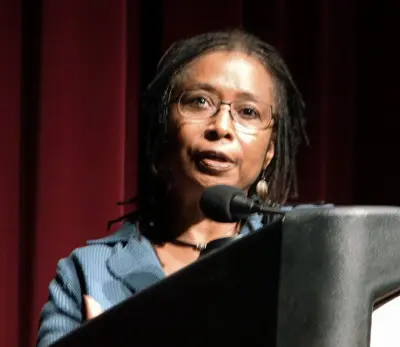
Alice Malsenior Tallulah-Kate Walker is an American novelist, short story writer, poet, and social activist. In 1982, she published the novel The Color Purple, for which she won the National Book Award for hardcover fiction, and the Pulitzer Prize for Fiction. She also wrote the novels Meridian (1976) and The Third Life of Grange Copeland (1970). An avowed feminist, Walker coined the term womanist to mean "A black feminist or feminist of color" in 1983.
