Henry Lee Quotes
We southern people must be slaves in effect, or cut the Gordion’s knot at once .
The essential conundrum for the Southerners of the Early United States was their independence as individual states vis a vis the trust and dependence that would be required if they gave up much of their traditional authority to manage their own affairs. However, if they chose to maintain States’ rights and other States did as well, they not only lose the security and unity of a nation, but the other states were more economically powerful, better educated, with stronger infrastructures as well. The changing world politics, industrialization, and technology was making it more and more difficult for a Southern State to have it both ways. They could have a loose affiliation of states, maintain their own autonomy but would be saddled with war debt and a slave-dependent economy that was itself deteriorating. Or they would be in a strong union where they were the weaker economic and political forces and might be politically and culturally dominated by states like Pennsylvania, New York and Massachusetts which would force major social and economic reforms upon the South. The knot to which Lee referred was the mythical one so complex that non could untie it, but it could instantly be cut with a sword. Lee argued that the Southern states would have to accept the dominance of the other states (which was like political slavery) or just cut the knot and not ratify the Constitution. More negotiating and trying to untie the knot would be useless.
Henry Lee, 1756-1818, Member of the Continental Congress, Governor of Virginia, U.S. Congressman (Federalist, VA), Father of Confederate General Robert E. Lee, Quoted in Joseph J. Ellis, Founding Brothers
Sourced by: Eigen's Political and Historical Quotations

This fear was great among many who were abolitionists as potentially there might be mass slaughter of all Southern whites.


The Parliament was debating the reaction to the Stamp Act by the American Colonies. One of the members, reflecting a majority view, asked sarcastically when the American Colonies had been emancipated so that they could make their own independent decisions. Pitt then hit this one out of the park by reversing the question.


The glorious spectacle of eighteen millions of people, struggling to burst their chains and be free.
The entire speech was translated into Spanish and read to great applause to Latin American revolutionary regiments.


This was one of the first calls for a slave strike in America.


This prophecy written in the later years of Jefferson’s life turned out to be all too true. St. Domingo was an Island in the Caribbean where slavery produced a bloody war. The American Civil War would be far worse.


Marion was the initiator of Guerilla Warfare and he and his men traveled lightly spending much time in the South Carolina swamps. They had few supplies and when chased by the British could not stop to hunt. The British called him the “Swamp Fox”. The American colonists at this point still thought of the British as “their countrymen.”

The point about the negroes who were born into American slavery being less aggressive than those captured and transported to America is often overlooked. Slavery not only was cruel, moral, and inhuman in its own right, but also took its toll over generations as a result of the psychological effects of the terror of slavery. Despite these, it is amazing how resiliant the American Blacks were under those circumstances. in some cases one or two saves escaped after committing a violent act as they had little to lose for trying as they wold be killed if caught. A few of these escaped to the North and others reached Southern Cities like Charleston where there was a small free black community in which they could be absorbed.


Under the pre-Civil War Southern economic system the poor whites had little chance of upward mobility and were in many wars as poorly off as slaves. Johnson saw this reform as much more important than the emancipation of the Negro.

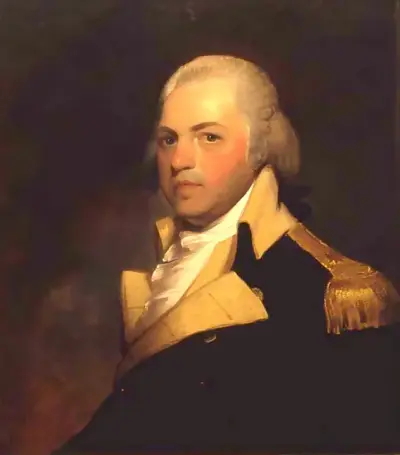
Major-General Henry Lee III was an early American Patriot and politician. He served as the ninth Governor of Virginia and as the Virginia Representative to the United States Congress. Lee's service during the American Revolution as a cavalry officer in the Continental Army earned him the nickname by which he is best known, "Light-Horse Harry". He was the father of Robert E. Lee, commander of the Confederate armies in the American Civil War.
