Sayyid Qutb Quotes
Those who say that Islamic Jihad was merely for the defense of the 'homeland of Islam' diminish the greatness of the Islamic way of life ...
Sayyid Qutb, 1906-1966, Egyptian Salafi Philosopher and Writer (Moslem Brotherhood), Quoted in Elmer Swenson, Sayyid Qutb's Milestones
Sourced by: Eigen's Political and Historical Quotations


The Christian Crusaders and the Muslim extremists through this day are not the only peoples who described atrocities as “Holy war.”

This phrase has been used by fundamentalists to justify forced conversion and the imposition of religious law—Sharia—on believers and unbelievers alike. The logic is that if God says believing orthodox Mosems are the best, that is what he wants for all. And therefore by forcing others to be orthodox and of the faith, one is doing God’s bidding. See Husain Haqqani, “Islam’s Medeval Outposts,” Foreign Policy November/December, 2002.

In modern times there has been much criticism of the Muslim fundamentalists and the claim of the religious leadership that those who die in Holy War (Jihad) will immediately go to heaven. The concern is that this encourages terrorism and aggressive war. Yet, here we have virtually the same kind of “reward” for violence as issued by the Christians. See {611697} for another such example.


Legal Religious Ruling. This is an example of a source of tension between some Muslims and others. Non-Muslims are required to have a Muslim Education in Muslim countries, but they insist that any required Christian or secular education in a non Muslim country is anti-Islamic.


This sura is interpreted in two ways. For many modern Muslims it means that in discussions and debates on religion with non-Muslims, do not back off, and if you do it is a religious transgression. Defend the faith. For the fundamentalists and extremists, they interpret the same sura in physical warlike terms. So if there is a fight or battle with disbelievers, retreating from the battlefield is not only cowardice and perhaps a crime under military regulations as it is in the West, but it is in Christian terms a mortal sin for which there one will go to hell. So the most religious of Muslims will fight to the death using this sura as their guidance. On the other hand, Muhammad himself as the military and civil leader of Islam made strategic retreats. In the history of almost all warfare between the West and Muslims—especially the Arabs—courage on the battlefield has been lacking and the Israelis, British, French, Americans, and Hindus of India all observe this military weakness and accounting for this is built into their military doctrine.

See {586039} for a quotation that goes further and seeks to punish and humiliate the non believers. This sura is often used by those wishing to illustrate the intolerance of Islam—especially of other religions. They fail to put this into the context of the Old Testament which proscribed death for heretics or the history of Christianity regarding the murder of nonbelievers. The difference is however, that a very small proportion of Jews or Christians today believe in following Biblical instructions in this respect while the proportion of Muslims who believe in the literal interpretation of scripture on these points is much larger. However there are Islamic modernists and moderates throughout the world who reject this notion of warring on all other religions and there is a struggle going on within Islam itself.

Ironically, while Radical Fundamentalist Muslims abroad claim that Western materialism and dem0cracy is not only anti-Islamic but a danger to Islam, in America there has been a growing and thriving Islamic community which has had far less difficulty reconciling their religion and American democracy and values than have other religions such as the Amish and orthodox Jews. This ease of the transition and Islamic compatibility with modern America is perhaps the central reason for the hatred of America. Aslan argues that the Muslim reformation is succeeding very smoothly in America and is the model for Muslims throughout the world.
The Sunna and Hadith are Islamic Reverential Texts. The “final battle” is prophesised just as in the Christian Book of Revelations such a final battle between good and evil is predicted (Armageddon), and is believed to be in the future by some fundamentalist Christians. One difference however is that a small population of Christians believe this literally, while most Muslims believe in the great battle to come. However in this case, the battle is between the Muslims and the evil heretics—all others.

She is a leading American Arab who is a Syrian expatriate.

At the time the Mongols were the “infidels” who dominated the area and the various Islamic sects were at odds with each other. According to him, belief is the highest duty and fighting for the religion was next in importance.
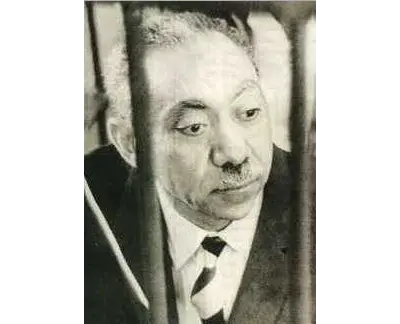
Sayyid Ibrahim Husayn Shadhili Qutb, known popularly as Sayyid Qutb, was an Egyptian author, educator, revolutionary, Jihadist ideologue, poet, and a leading member of the Egyptian Muslim Brotherhood in the 1950s and 1960s. In 1966, he was convicted of plotting the assassination of Egyptian President Gamal Abdel Nasser and was executed by hanging. Sayyid Qutb is considered as "the Father of Salafi-Jihadism", the religio-political doctrine that underpins the ideological roots of Global Jihadist organisations such as Al Qaeda and Daesh.
