Muhammad Zia ul-Haq Quotes
The professional soldier in a Muslim army, pursuing the goals of a Muslim state, CANNOT become 'professional' if in all his activities he does not take on 'the color of Allah'. The non-military citizen of a Muslim state must, likewise, be aware of the kind of soldier that his country must produce…
Muhammad Zia ul-Haq, 1924-1988, General, Coup Leader, and President of Pakistan, Forward to S. K. Malik, The Quranic Concept of War, 1986
Sourced by: Eigen's Political and Historical Quotations


Legal Religious Ruling. This is an example of a source of tension between some Muslims and others. Non-Muslims are required to have a Muslim Education in Muslim countries, but they insist that any required Christian or secular education in a non Muslim country is anti-Islamic.

Theological & Legal Expert. The Sunnah, like the Koran, has statements of the Prophet, Mohammad. A fatwa is a religious legal ruling. This particular Fatwa shows the great difference between the Islamic State and a Republic or Democracy. In the latter forms, any religious practices must be consistent with the Constitution. Even though blasphemy might be prohibited by a religion, the United States Constitution for example protects anyone’s right to be blasphemous. In the Islamic system any constitution or law is subservient to and must be consistent with, the sayings of the Prophet Muhammad. In that sense, unless the Muslim populated nation is secular like Turkey, then the governments are partial or total theocracies.

Under this interpretation of Islamic law – Sharia – virtually anything regardless of how sinful or immoral under normal circumstances is morally permissible if Islam is being defended from attack. Not all Muslim theologians agree with this principle. See {589498}. There was a similar perversion of theological logic used by Christian Popes during the Crusades.

This quotation was reported to Congress by Thomas Jefferson. Essentially, this religious justification is no different from that made by contemporary Islamic extremists. Particularly interesting is the last sentence. The Koran states that all Muslims who die defending Islam will go immediately to heaven regardless of their previous sins and transgressions. Under that justification, even criminal extortion and terrorism is justified by some Muslims whenever the victims are non-believers.


If some Islamic cleric declares a war or dispute to be an attack on Islam, the penalty is indeed severe for those Muslims who do not join the fight. In some Islamic lands, unbelievers are put to death. Note that the children become the Islamic society’s hostages for the behavior of the father.
This is not terribly different however from Christians and Jews selectively quoting the Bible.


The Manual was found by the Manchester (England) Metropolitan Police during a search of an Al Qaida member's home.

Note that the weak are not to be killed in a jihad UNLESS they “fight with words.” If a woman, child, invalid, older person says something that is interpreted as contrary to Islam, they too shall be killed along with all the males. The overriding principle is that anyone who interferes with the dominance of Islam, is to be killed.
This is a very important quotation as it shows the logic of many Islamic terrorists. To them Jihad is not terror regardless of what means are used. If the cause is just, like driving unbelievers from what they call Islamic land, then the violence is Jihad and is not only moral but is obligatory for a good Muslim. However if the cause is not moral—like invading someone else’s land, then the same actions are terrorism. The rest of the world defines terrorism by the means of the struggle—not the righteousness of the cause. Suicide Bombing which kills civilians shopping or at a wedding reception is terrorism whether the political or other end is good or bad. At the same time, members of the Muslim brotherhood often when they are speaking to Westerners or the media say that they are opposed to terrorism. The terrorism they are opposed to does not include to them does not include the terrorism of 9-11, the kidnapping and beheading of journalists, or bombing innocent civilians. That is why they can fund and support Hamas—the Palestinian component of the Muslim Brotherhood and still say they oppose terrorism. The occupation is the major offence they must rectify. The reality is that every group of people currently in the Middle East, is descended from peoples who occupied land by conquest and then were conquered by others. In Christ’s time, for example, Jerusalem and the area population was virtually all Jewish but the Romans had conquered and controlled the land. Some of the Jews became Christians, and they both shared the land because Christians then considered themselves to be a sect of Judaism. Then there were many conquests and re-conquests. The city has changed hands by force 44 different times. The Israelis were the last to capture it, The Jewish people were also amongst the earlier conquests, and the Palestinians argue that they inhabited the land even before Islam. Compared to Jerusalem, the problem of who has the right to the old Cherokee land in Georgia today is simple.
The Basiji are an Iranian revolutionary organization of over 10 million young boys who have volunteered to be martyrs. They are led by men over 45 who guide them. Tens of thousands of them died in human wave attacks and mine clearing operations. See {619829}.

Here Khomeini takes the classic Islamic view of the Koran that leaders should be obeyed unless they do not follow Islam. To the leaders of Islamic nations, this means that even if the state is not a theocracy, the Muslim clergy has the final say as to whether a ruler may justly remain in power since they are the ones who determine if a ruler is properly following Islam.
This was a book on Islamic law—Sharia. According to Khomeini, if a Muslim kills a Muslim he should be punished for murder. However of a Muslim kills a non Muslim, he should not be punished unless he is a serial killer of non-Muslims. This is not in the context of Jihad but in the ordinary course of normal human activity where murder may be committed. This is just another way in which Christians, Jews and others who are not Muslims are second class citizens in Islamic law.
Religious obligation of Islam requires all Muslims to try and convert all others. However that is not different from some of the Christian, fundamentalist religions where attempted conversion of non-believers is a duty. However, where many in the Islamic world see that obligation as a peaceful, nonviolent, effort to persuade others to accept Islam, there are many others who believe that Jihad should impose Islamic law—Sharia—upon the world and the use of force and violence is not only acceptable but is necessary and desirable to achieve their objection.
The Messenger is Muhammed, founder of Islam. The Hadith are his sayings which have been compiled but are not in the Koran.
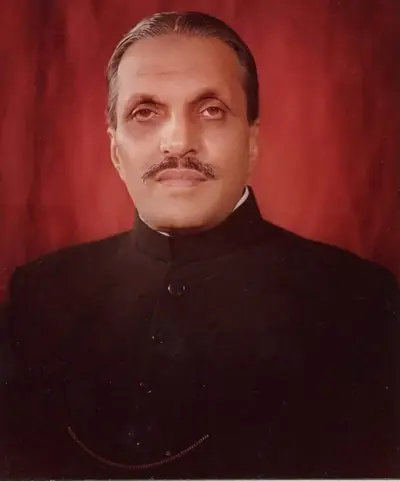
Muhammad Zia-ul-Haq was a four-star general who became the sixth President of Pakistan after declaring martial law in 1977. He served as the head of state from 1978 until his death in a plane crash in 1988. He remains the country’s longest-serving head of state. Educated at St. Stephen's College, Delhi, and the Royal Indian Military Academy at Dehradun, Zia saw action in World War II as a British Indian Army officer in Burma and Malaya, before opting for Pakistan in 1947 and fighting as a tank commander in the Indo-Pakistani War of 1965. In 1970, he led a military training mission to Jordan, proving instrumental to defeating the Black September insurgency against King Hussein. In recognition, Prime Minister Zulfikar Ali Bhutto appointed Zia Chief of Army Staff in 1976 and awarded him the Hilal-i-Imtiaz medal.
