Clementa C. Pinckney Quotes
This is Robin Hood in reverse. These tax cap proposals favor those with the most expensive properties. We are spreading the taxes to those with some of the least expensive property.
Pinckney, Clementa C. Remarks in the South Carolina State Senate. Quoted in "Property Tax Debate." The State [Columbia, SC], 2006.


An income tax had been instituted during the Civil War but had lapsed. Existing taxes were all excise or head taxes—very regressive. Later there was a political movement to bring back the income tax with the intention of taxing all income equally. There was a titanic struggle which culminated in a Constitutional Amendment allowing the income tax. None of the original politicians, for or against, the income tax could never imagine an income tax that would charge lower rates for investment income. That was the entire purpose of the income tax at the beginning—to tax investment (unearned) income. The “capital gains tax” was the creative way of the rich getting back some of what they thought the lost when the income tax was instituted.

At the time there were tax breaks for large yachts but not for small boats that a middle class person might own. It was another example of the tax laws at the time where the poor paid only Social Security taxes, and the rich lobbied for an got very large tax breaks and subsidies and hence the burden was carried by an increasingly stressed middle class and by cuts in services to the needy. The companies that made the yachts also supported the tax breaks as did the unions and workers in the industry. See {624985}. .

The nation rejected the flat tax that was favored by conservatives in the 1930s. However, in the Republican Presidential Primary Campaign of 2000, candidate Steve Forbes made the flat tax a centerpoint of his campaign. He lost badly, but the idea caught on amongst some conservative Republicans, and has had some support since.

whether or not to buy luxuries This quotation and {639885} together illustrate why it is so difficult to classify historical politicians in the left-right categories of a future time. Here Gogel seems a strong liberal arguing for progressive taxation and luxury taxes, and tax relief for the poop, while in {639885} he sounds like a 21st century extreme conservative.


The founder was Charles E. Coughlin, 1891-1979, a demagogic Catholic Priest who drafted the principles and invited others to join him. Hundreds of thousands did in this organization which began in idealism, and ended in scandal and hate mongering, so much so that Father Coughlin was ordered off the radio and out of politics by the Catholic Church. The National Union in 1936 had morphed into the Union Party which ran Presidential candidates in the 1936 election. At the time, a progressive income tax was an anathema to most people, however it became the norm in later years and although the idea did not originate with the Union, was one of the few lasting contributions of the Union.


This became known as the Buffet Principle—that the very rich should not pay a lower tax rate than the workers who make far less money than they do. President Barack Obama used this principle by name in calling for the 2011 Jobs Act which would eliminate some of the loopholes and exemptions by which the rich could avoid some or much or their tax obligation.
At the time, he, th richest man in America was paying a lower ta rate than his secretary, his employees and the waiter who served him lunch. The “Buffet Rule” was developed and named for him that said that wealthy people should pay a minimum rate of taxation regardless of tax credits, deductions and other means of tax avoidance.

Comment made in the Congressional Congress debates in 1787. This precedes individual taxation. In the debate, Wilson felt state taxation “should accord with the number of freemen” as “it is strange that annexing the name of ‘State’ to ten thousand men, should give them an equal right with forty thousand.”


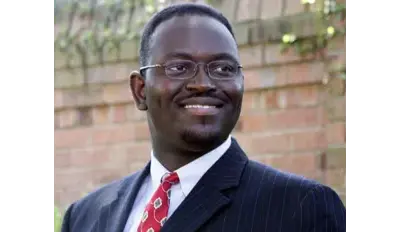
Clementa Carlos "Clem" Pinckney was an American politician and pastor who served as a Democratic member of the South Carolina Senate, representing the 45th District from 2000 until his death in 2015. He was previously a member of the South Carolina House of Representatives from 1997 through 2000.
