John Sherman Quotes
Here we have in New York Mr. Aster with an income of millions derived from real estate, … and we have along side of him a poor man receiving $1000 a year. What is the discrimination of the law in that case? It is altogether against the poor man—Everything that he consumes we tax, and yet we are afraid to tax the income of Mr. Astor. Is there any justice to it? Why, sir, the income tax is the only one that tends to equalize the burdens between rich and poor.
An income tax had been instituted during the Civil War but had lapsed. Existing taxes were all excise or head taxes—very regressive. Later there was a political movement to bring back the income tax with the intention of taxing all income equally. There was a titanic struggle which culminated in a Constitutional Amendment allowing the income tax. None of the original politicians, for or against, the income tax could never imagine an income tax that would charge lower rates for investment income. That was the entire purpose of the income tax at the beginning—to tax investment (unearned) income. The “capital gains tax” was the creative way of the rich getting back some of what they thought the lost when the income tax was instituted.
John Sherman, 1823-1900, U. S. Congressman & Senator (Republican, OH), U. S. Secretary of the Treasury, U. S. Secretary of State, Senate Debate in the Income Tax, 1872
Sourced by: Eigen's Political and Historical Quotations


FDR had as usual been attacked by the Chicago Tribune and other conservative newspapers. His assistant Raymond Moley drafted the response.

This became known as the Buffet Principle—that the very rich should not pay a lower tax rate than the workers who make far less money than they do. President Barack Obama used this principle by name in calling for the 2011 Jobs Act which would eliminate some of the loopholes and exemptions by which the rich could avoid some or much or their tax obligation.
The nation rejected the flat tax that was favored by conservatives in the 1930s. However, in the Republican Presidential Primary Campaign of 2000, candidate Steve Forbes made the flat tax a centerpoint of his campaign. He lost badly, but the idea caught on amongst some conservative Republicans, and has had some support since.


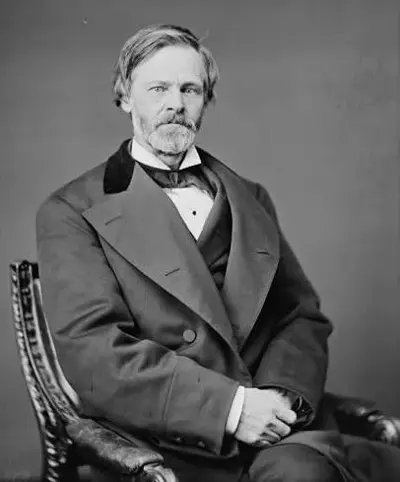
John Sherman was a politician from the U.S. state of Ohio during the American Civil War and into the late nineteenth century. A member of the Republican Party, he served in both houses of the U.S. Congress. He also served as Secretary of the Treasury and Secretary of State. Sherman sought the Republican presidential nomination three times, coming closest in 1888, but was never chosen by the party.
