Richard Neal Quotes
The tax relief that this Congress has given now in terms of four tax cuts has overwhelmingly gone to the people at the very top of the income scale in America.
United States. Congress. Congressional Record. Government Printing Office, 10 May 2006, p. H2379.


The tax rates on income from working is much higher than on income generated from money which is invested. The reason for this is that the government wants economic growth and lowering the tax rate on investment profits will produce more investment which theoretically creates more jobs and strengthens the economy. However, most workers have no choice about whether they have to work. Lowering their tax rate will not induce them to work more. This not only produces a patently unfair burden on the worker compared to people who have capital to invest—usually among the wealthiest Americans. Another problem is that there are many forms of investment that does not produce any benefit for the United States. Many people invest in overseas banks, non American companies. These we tax at a low rate and all the benefits of the investment go to the foreign country.


An income tax had been instituted during the Civil War but had lapsed. Existing taxes were all excise or head taxes—very regressive. Later there was a political movement to bring back the income tax with the intention of taxing all income equally. There was a titanic struggle which culminated in a Constitutional Amendment allowing the income tax. None of the original politicians, for or against, the income tax could never imagine an income tax that would charge lower rates for investment income. That was the entire purpose of the income tax at the beginning—to tax investment (unearned) income. The “capital gains tax” was the creative way of the rich getting back some of what they thought the lost when the income tax was instituted.


The nation rejected the flat tax that was favored by conservatives in the 1930s. However, in the Republican Presidential Primary Campaign of 2000, candidate Steve Forbes made the flat tax a centerpoint of his campaign. He lost badly, but the idea caught on amongst some conservative Republicans, and has had some support since.


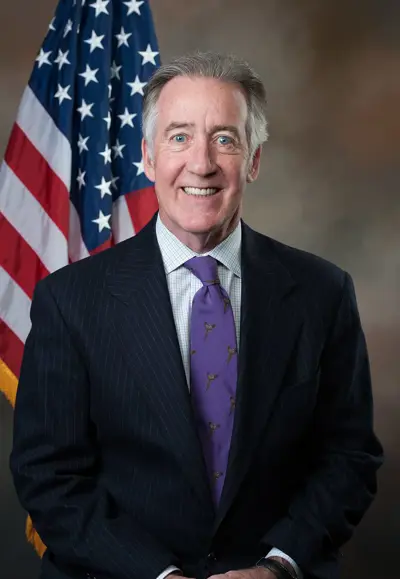
Richard Edmund Neal is an American politician serving as the U.S. Representative for Massachusetts's 1st congressional district since 1989. The district, numbered as the 2nd district from 1989 to 2013, includes Springfield, West Springfield, Pittsfield, Holyoke, Agawam, Chicopee and Westfield, and is much more rural than the rest of the state. A member of the Democratic Party, Neal has been the dean of Massachusetts's delegation to the United States House of Representatives since 2013, and he is also the dean of the New England House delegations.
