Rutherford B. Hayes Quotes
Is this not true--That in proportion to the value of their estates the extremely wealthy pay far less taxes than those of moderatemeans? Compare the amount paid by millionaires with the amount paid by ordinary citizens. I believe that in proportion to their estates they pay less than half as much as ordinary citizens, whereas they ought to pay more.
Hayes, Rutherford B. Diary and Letters of Rutherford Birchard Hayes, edited by Charles Richard Williams, vol. 4, Ohio State Archaeological and Historical Society, 1925, p. 293.


whether or not to buy luxuries This quotation and {639885} together illustrate why it is so difficult to classify historical politicians in the left-right categories of a future time. Here Gogel seems a strong liberal arguing for progressive taxation and luxury taxes, and tax relief for the poop, while in {639885} he sounds like a 21st century extreme conservative.


An income tax had been instituted during the Civil War but had lapsed. Existing taxes were all excise or head taxes—very regressive. Later there was a political movement to bring back the income tax with the intention of taxing all income equally. There was a titanic struggle which culminated in a Constitutional Amendment allowing the income tax. None of the original politicians, for or against, the income tax could never imagine an income tax that would charge lower rates for investment income. That was the entire purpose of the income tax at the beginning—to tax investment (unearned) income. The “capital gains tax” was the creative way of the rich getting back some of what they thought the lost when the income tax was instituted.

This became known as the Buffet Principle—that the very rich should not pay a lower tax rate than the workers who make far less money than they do. President Barack Obama used this principle by name in calling for the 2011 Jobs Act which would eliminate some of the loopholes and exemptions by which the rich could avoid some or much or their tax obligation.


FDR had as usual been attacked by the Chicago Tribune and other conservative newspapers. His assistant Raymond Moley drafted the response.
At the time, he, th richest man in America was paying a lower ta rate than his secretary, his employees and the waiter who served him lunch. The “Buffet Rule” was developed and named for him that said that wealthy people should pay a minimum rate of taxation regardless of tax credits, deductions and other means of tax avoidance.


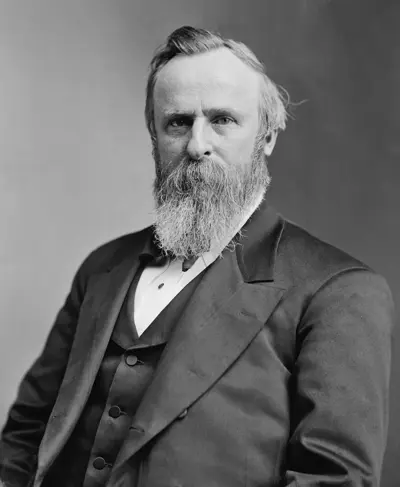
Rutherford Birchard Hayes was an American politician and attorney who served as the 19th president of the United States from 1877 to 1881, after serving in the U.S. House of Representatives and as governor of Ohio. A lawyer and staunch abolitionist, he had defended refugee slaves in court proceedings during the antebellum years. He negotiated the political agreement to end federal support of Reconstruction.
