Isaac Jan Alexander Gogel Quotes
When a government finds itself in the calamitous circumstances where it … must tax its people heavily, it behooves it, so far as possible, to see that all those who are liable pay according to their means, and that a proper assessment is made of them. In this way, the middle class is not taxed in order to spare the rich, nor the poor so much more burdened that they no longer have any possibility of improving their condition. Labor is encouraged and industry not deterred. Trade remains free and restricted as little as possible, and so far as possible taxes are levied on objects which go beyond necessity, coming under the category of luxuries, and are therefore conditioned on the choice of the people .
whether or not to buy luxuries This quotation and {639885} together illustrate why it is so difficult to classify historical politicians in the left-right categories of a future time. Here Gogel seems a strong liberal arguing for progressive taxation and luxury taxes, and tax relief for the poop, while in {639885} he sounds like a 21st century extreme conservative.
Isaac Jan Alexander Gogel, 1765-1821, Dutch Politician, Patriot & Revolutionist, Minister of Finance, Agent for Foreign Affairs, Memorandum for King William I, 1818
Sourced by: Eigen's Political and Historical Quotations

This statement by a Dutch politician at the beginning of the 19th century would have been a perfect statement of the conservative and cultural Republicans of the end of the 20th century ad beginning of the 21st. It includes the government overseeing of the morals of the society which most cries for minimal government do not have as an exception as herein. This quotation and {639886} together illustrate why it is so difficult to classify historical politicians in the left-right categories of a future time. Here Gogel seems a strong conservative arguing for minimal government , while in {639886} he sounds like a 21st century extreme liberal.

This became known as the Buffet Principle—that the very rich should not pay a lower tax rate than the workers who make far less money than they do. President Barack Obama used this principle by name in calling for the 2011 Jobs Act which would eliminate some of the loopholes and exemptions by which the rich could avoid some or much or their tax obligation.


Opposing the ratification of the United States Constitution: Left before it ended.


This is one of the first American Presidential statements citing the virtue of progressive taxation. What was an oppressive tax for one person might not be for another.


An income tax had been instituted during the Civil War but had lapsed. Existing taxes were all excise or head taxes—very regressive. Later there was a political movement to bring back the income tax with the intention of taxing all income equally. There was a titanic struggle which culminated in a Constitutional Amendment allowing the income tax. None of the original politicians, for or against, the income tax could never imagine an income tax that would charge lower rates for investment income. That was the entire purpose of the income tax at the beginning—to tax investment (unearned) income. The “capital gains tax” was the creative way of the rich getting back some of what they thought the lost when the income tax was instituted.
Martin was explaining the position of Pope John Paul II.


As a result of years of lobbying many vested interests were getting tax exemptions for their activities. Some of the richest corporations and people paid little or no taxes. This was like the old European monarchies where the dukes and nobles got tax exemptions from the king and the middle class and poor people paid a much larger percentage of their income and wealth than did the nobility. Fairness in taxation is very difficult in practice. See {633629}
At the time, he, th richest man in America was paying a lower ta rate than his secretary, his employees and the waiter who served him lunch. The “Buffet Rule” was developed and named for him that said that wealthy people should pay a minimum rate of taxation regardless of tax credits, deductions and other means of tax avoidance.

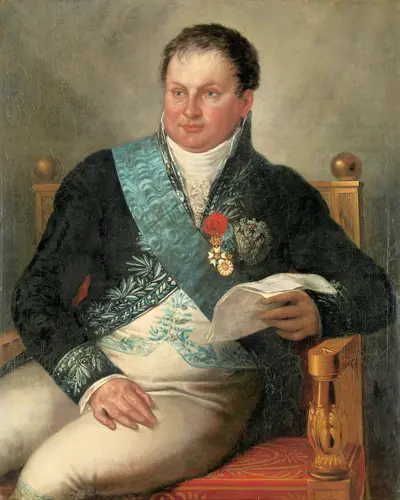
- Born: December 10, 1765
- Died: June 13, 1821
- Nationality:
- Profession:
Isaac Jan Alexander Gogel was the first minister of finance of the Batavian Republic and the Kingdom of Holland. He married Catharina van Hasselt in 1800, and had three children.
