William Shakespeare Quotes
This blessèd plot, this earth, this realm, this England
This nurse, this teeming womb of royal kings,
. . .
This land of such dear souls, this dear dear land.
Shakespeare, William. Richard II. The Riverside Shakespeare, edited by G. Blakemore Evans, 2nd ed., Houghton Mifflin, 1997, 2.1.50-57.


“Somsteu” was the name the Africans gave to Theophilus Shepstone, 1817-1893, British Colonial African Administrator.

The king would often walk alone or with only a few companions. His brother expressed concern about exposing the royal person to risk.


A very passionate minority of India’s Muslims demanded a separate Islamic State (that would become Pakistan) but Hindu’s and Muslims were mixed throughout India and many Indians and British were concerned that there would be a bloodbath if the plans for independence went forward. When the decision had been made to partition India, Radcliffe had the unenviable task of deciding where the boundary was to be between Pakistan and India. No one on either side was satisfied with his effort. So, realizing that violence was about to break out, he packed quickly and went back to England. Over two million Indians were killed in the violence that broke out in the next weeks as there was a huge migration and ethnic cleansing to implement Radcliffe’s boundaries. Fifty years later, both India and Pakistan acknowledge that Radcliffe did a very reasonable job.


He particularly had difficulty with the Pope and whose authority was supposed to be dominant in Europe. King Henry left the Catholic Church and made Protestantism the official English Church. It has been such ever since—all the result of a power struggle between two men.

Note that in addition to getting rid of the authority of the King, New York—over a decade before the Bill of Rights and the First Amendment, provided for a ban on an established church or favoring one Christian sect over another. Even then New York was a multi religious and multi ethnic society with its strong Dutch tradition along with the English tradition. New York did not go as far as the First Amendment would do later in terms of freedom of religion. NY only mentioned Christian sects. However they did implement separation of church and state and an establishment clause. See {621429} for another clause that ensures separation of church and state.


In 1848 a number of revolutions flared throughout Europe with a call for democracy rather than monarchy. The Prussian king was one of those who really believed that he was selected by God to rule, was very frightened and tried to enlist the Queen and England to present a united front against the revolutionaries. England, which had already had a strong functioning parliament and extensive voting suffrage, protected most of the rights of its citizens and was a Constitutional Monarchy where there were limits to the power of the monarch. Further, Victoria was extremely popular and in many ways was far ahead of the electorate in terms of modern democratic reforms. So she was not in the panic of many of the other crowned heads of Europe were in. Somewhat following the example of England, King William IV allowed a parliament and minimized the strong military role that characterized Prussia. Most of the 1848 revolutions failed to sieze governments but, as with Prussia, forced reforms in what was a long movement to European democracy that would take another 150 years. Note also the logic about religion. Since the revolutionists did not believe in the divine right of kings, they opposed God’s will on earth. Therefore, they opposed God and must be atheists. Almost all counter revolutionary accusations included the claim—often not true—that the revolutionaries were atheists.


Some of the Patriots of Early America realized that the oppressions of British rule were coming from Parliament and initially took the position that only the King could make laws for the colonies and not Parliament. Therefore, they were as Englishmen challenging illegal English laws. Most American hostility was directed at Parliament and not the King. However, once there was any physical resistance, King George came down with such a heavy hand that American hatred transferred to him. For related quotes on the King/Parliament issue, see {639145}, {639143}, {639142}, {639141}, {639140}, & {639137}

Windsor was the Kings palace and the King felt that was all he really controlled.
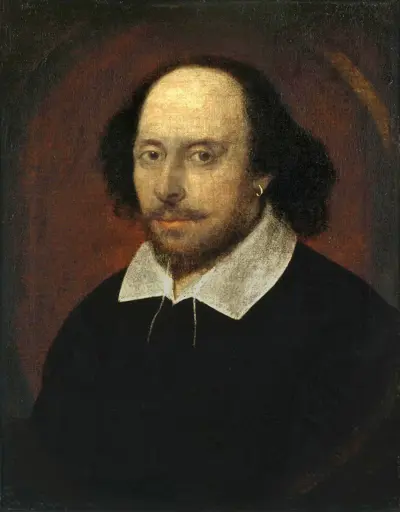
William Shakespeare was an English playwright, poet, and actor, widely regarded as the greatest writer in the English language and the world's greatest dramatist. He is often called England's national poet and the "Bard of Avon" (or simply "the Bard"). His extant works, including collaborations, consist of some 39 plays, 154 sonnets, three long narrative poems, and a few other verses, some of uncertain authorship. His plays have been translated into every major living language and are performed more often than those of any other playwright. They also continue to be studied and reinterpreted.
