Thomas Ustick Walter Quotes
Things are more unpleasant here every day. The Senate chamber is filled with lice. It makes my head itch to think of it. The building is like one grand water closet. Every hole and every corner is defiled.
“Water closet” was the term for toilet then. There were few toilets and much more activity as a result of the Civil War
Thomas Ustick Walter, 1804–1887, U. S. Capitol Architect, Comment on the state of the Capitol Building, 1861
Sourced by: Eigen's Political and Historical Quotations

Lyon had spat in the face of Congressman Roger Griswald, 1762-1812 who had called Lyon a coward. Modern House rules prohibit personal attacks and remarks about fellow Congressmen.


He was an ordained Catholic Priest but broke with the Church when he advocated democracy and separation of church and state.


The United States had not yet dug its canal but there had been a feeble French attempt amidst national and international scheming, intrigue, and fraud.

In June of 1850, a bipartisan group of Southern politicians met in Nashville, TN for the purpose of organizing strategy and tactics to ward off and defeat the growing aggressiveness of Northern politicians and other leaders in trying to abolish slavery. They issued an address to the people. This is one of the clearest statements of the position of most of the Southern Politicians on the increased efforts to abolish or curtail slavery.


This is the original legislation that established the Coast & Geodetic Survey which is now an agency of NOAAA.


McCarthy was an alcoholic, paranoid demagogue who attacked anyone who went against him, usually calling him a Communists or agents of the Communist conspiracy. McCarthy was very powerful until some national leaders stood up to him and publicly demanded the proof he claimed he had. He was not able to prove he ‘uncovered’ a single communist. After that, he was censured by the Senate and lost his power and influence.

This is an important political quotation because it illustrates one of the major reasons that Congress was so gridlocked at the time and passed hardly any legislation at all. Farenthold was a relatively new Congressman supported by the Tea Party extreme conservatives. He had no Congressional legislative experience and viewed the House / Senate Conference Committee process more like a Middle East rug bazaar than a serious democratic process of constructive legislation. The position that he wants to take to the Conference Committee which is “livable” to him is not only unlivable to the majority of the Senate, but unlivable for a large part of his own House of Representatives, His position is so extreme that most Senators and many House members on the Conference Committee do not even bother to attempt to negotiate from there. Experienced Congressional legislators realize that negotiation can only take place between realistic options. Otherwise no legislation gets passed which was at that time, OK with most of the Tea Party supporters.

Explaining his opposition to civil rights legislation:


That particular Congress was the worst in American history in terms of passing legislation. Mainly there was philosophical gridlock between conservatives and liberals and worse between Tea Party Conservatives and mainstream conservatives. The Iraqi legislature was gridlocked religiously between Sunni and Shiite Muslims.

Some were calling for a national referendum be taken to determine American policy regarding participating with the League of Nations or other international organizations.

A century afterwards, the biggest change was that the price of the Senate seat had gone up and the Political Action Committees had joined the Party Treasuries as the recipients of the money In the early 21st century almost all the Senators were multi-millionaires.

It was common then for people to die in tenements as a result of shoddy construction, poisoning by sewer gas, and unsanitary conditions. As the result of the efforts of reformers like Riis and Theodore Roosevelt health inspectors were appointed and errant builders went to jail—in some cases for manslaughter.

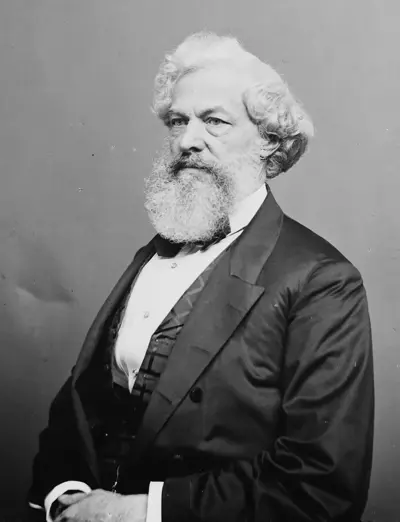
Thomas Ustick Walter was an American architect of German descent, the dean of American architecture between the 1820 death of Benjamin Latrobe and the emergence of H.H. Richardson in the 1870s. He was the fourth Architect of the Capitol and responsible for adding the north (Senate) and south (House) wings and the central dome that is predominately the current appearance of the U.S. Capitol building. Walter was one of the founders and second president of the American Institute of Architects. In 1839, he was elected as a member to the American Philosophical Society.
