Norman H. Davis Quotes
My personal opinion is that a referendum is not necessary to sense public opinion or get a non-partisan consideration of this question. It cannot relieve the President and the Senate of their constitutional powers and duties in respect to foreign relations. I believe the American people prefer to express their will through the representatives selected by them, and in accordance with our long-established constitutional methods.
Some were calling for a national referendum be taken to determine American policy regarding participating with the League of Nations or other international organizations.
Norman H. Davis, 1878–1944, Assistant Secretary of Treasury (Democrat), Undersecretary of State (Democrat), President of the Trust Company of Cuba, “American Foreign Policy: a Democratic View”, Foreign Affairs, September 1923
Sourced by: Eigen's Political and Historical Quotations

Senators have throughout our history used their power of treaty ratification to encroach on the executive branch and participate in the actual negotiations of treaties. President’s like McKinley to avoid non ratification actually appointed 3 senators to his 5 man treaty negotiating team. The 2/3 super majority is a high hurdle for ratification and presidents have always tilted with the Senate on treaties.

The State Constitutional ratification convention for Constitutional amendments is

At the time the power and prestige of Congress relative to the Presidency , was much greater than it is today. It was McKinley’s successor, Theodore Roosevelt, who began a 20th century trend which led to a reversal of the relationship between the Executive Branch and the Legislative.


His role was the equivalent of the Mayor of Washington DC. Even though the Congress had generally been the most powerful branch of the government, public opinion on this was beginning to shift at the turn of the 20th century.

This letter was written shortly after the Constitution had been signed by the convention delegates. This difference between Adams and Jefferson would be at the heart of the first great partisan struggle in American history. Adams, as the second President, tried to increase and use the power of the Presidency. Jefferson opposed him, especially when Adams tried to run for a second term. The Adams-led Federalists were pitted against Jefferson’s Democratic Republicans in the first, and perhaps still the most bitter partisan struggle in American political history. The Jeffersonians accused Adams and the Federalists of trying to unravel the American Revolution and revert to a monarchy. The people not only sided with the Democratic Republicans, ousting Adams, but also turned out most of the Federalists. It was the end of the Federalist Party, and a new conservative party—without monarchial tendencies—the Whigs became the new opposition party.


Periodically in American history, there has been a struggle between the Executive Branch and the Senate for dominance. The Senate’s power is negative however. It can block things, but cannot directly make them happen. The President can do both.


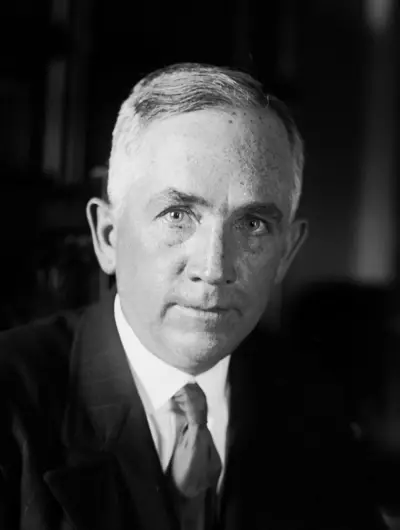
Norman Hezekiah Davis was a U.S. diplomat. He joined the Treasury Department in 1917, serving as President Wilson's chief financial advisor at the Paris Peace Conference. In 1919 he was appointed Assistant Secretary of the Treasury, and the following year became Under Secretary of State.
