Florence Nightingale Quotes
A dark house is always an unhealthy house, always an ill-aired house, always a dirty house. Want of light stops growth and promotes scrofula, rickets, etc., among the children. People lose their health in a dark house, and if they get ill, they cannot get well again in it.
Nightingale, Florence. Notes on Nursing: What It Is, and What It Is Not. Harrison, 1860, p. 47.

“Water closet” was the term for toilet then. There were few toilets and much more activity as a result of the Civil War


The AMC stated that Alamoudi, a well-known supporter of Hezbollah and Hamas, was not acting or speaking on its behalf and apologized to the reporter.


This quotation illustrates one of the contemporary problems that Muslims face. The problem of overeating and especially obesity are now known to be serious health problems. The Prophet had called attention to this while the majority of the world, afraid of starvation, considered obesity and overeating as a sign of affluence and health. In that sense the Prophet provided sound medical advice. However, for those Muslims who take the words of the Prophet literally, they take the statement literally and therefore pay little or no attention to immunization, water pollution, sanitation other than specified by the Prophet. To them, there are no other causes of disease because Muhammed said so. The wisdom from Aristotle to Einstein typically moved knowledge and mankind ahead with new and critical insights and revelations but all were wrong in some respects and future science has determined that. But for the fundamentalist Muslim, there can be no error in the word of the Prophet, just as for the fundamentalist Christian or Jew, there can be no error in their Bibles. Although valid for Muslims, the Hadith is less well known than the Koran which is recited by all good Muslims.


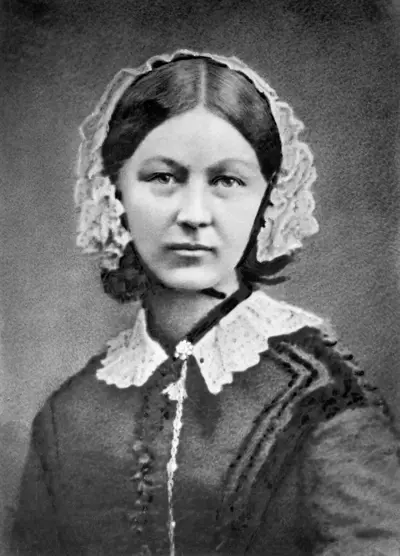
Florence Nightingale, OM, RRC, DStJ was an English social reformer, statistician and the founder of modern nursing. Nightingale came to prominence while serving as a manager and trainer of nurses during the Crimean War, in which she organised care for wounded soldiers at Constantinople. She gave nursing a favourable reputation and became an icon of Victorian culture, especially in the persona of "The Lady with the Lamp" making rounds of wounded soldiers at night.
