Friedrich Engels Quotes
How is it possible that the poorer classes can remain healthy and have a reasonable expectation of life under such conditions? What can one expect but that they should suffer from continual outbreaks of epidemics and an excessively low expectation of life? The physical condition of the workers shows a progressive deterioration.
Friedrich Engels, 1820-1895, English Socialist & Revolutionist Theorist, The Condition of the Working Class in England in 1844, 1845
Sourced by: Eigen's Political and Historical Quotations

This was a new idea for most Americans at the time. A century later, there were still a few politicians who did not accept this idea.


As the son of a former president he fought in both WWI and WWII and was awarded the Congressional Medal of Honor. See {593105} for another quotation on the poverty of Puerto Rico.
Wealthy Americans are far healthier and live longer than poor Americans.


President Reagan had given one of his classic, optimistic speeches that connected so well with most of the public. In it he used the Winthrop Puritan metaphor of the "shining city on the hill"—an example that the world will look to in his description of America. His administration was the beginning of a long ear where the upper class grew wealthier and the standard of living of the poor actually decreased a little, which then evolved to the stage where the 1 percent accelerated their increase in wealth and even the middle class stagnated. Cuomo sounded the warning.


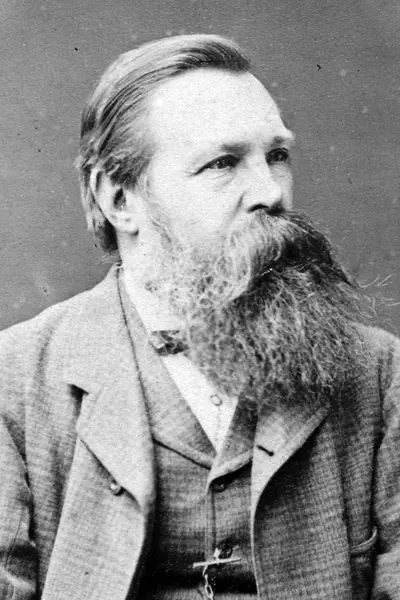
Friedrich Engels (/ˈɛŋ(ɡ)əlz/ ENG-(g)əlz, German: [ˈfʁiːdʁɪç ˈʔɛŋl̩s]), sometimes anglicised as Frederick Engels, was a German philosopher, economist, historian, political theorist and revolutionary socialist. He was also a businessman, journalist and political activist, whose father was an owner of large textile factories in Salford (Lancashire, England) and Barmen, Prussia (now Wuppertal, Germany).
