Preston Brooks Quotes
They had no right, as it seems to me, to prosecute me in these Halls; nor have you the right in law or under the Constitution, as I respectfully submit, to take jurisdiction over offenses committed against them.
Brooks, Preston S. "Personal Explanation—Speech of Hon. P. S. Brooks, of South Carolina, in the House of Representatives, July 14, 1856." Appendix to the Congressional Globe, 34th Congress, 1st Session, John C. Rives, 1856, p. 831.


On the Fugitive Slave Act: As one of the leading American Catholic intellectuals during the 19th Century, Brownson’s opinions went far in keeping Catholics from joining the side of the abolitionists. However, just a few years later his tone would change and he would become one of the few Catholic writers to refuse to defend slavery, see {610710}. While the majority of Catholics refused to join the abolition movement, they often did so because abolitionism was closely tied to anti-Catholicism, see Gordon {611392} or Shaftesbury {611106}. Other reasons included Irish immigrants fearful of competition from Black labor and the fear of liberal individualism and social disorder, which was prevalent in 19th century Catholic thought. For a further explanation on the relationship between American Catholics and slavery, see McGreevy {612036}.

Federal officials and commissioners issued laws, directives and orders that were very unpopular with the Mormons who were in the overwhelming majority of the Utah territory. The Mormon “government” was a type of theocracy but a very popular one. The Mormons tried to test the constitutionality and legality of the Federal laws and orders before they would obey. The government position was that they should obey and then could test the laws in the courts. The Mormons eventually lost in the courts anyway, but the principle of obedience to law until it can be tested and reversed has generally been the rule of U. S. Law. However, civil disobedience in which many religions have engaged in our history argues the obverse. Eventually Taylor had to go “underground” and rule the church from exile in which state he died.


President George W. Bush had ignored a federal law and tapped the phones of Americans without probable cause and a warrant issued by a court. The President’s defenders argued that the President, as Commander in Chief, has the Constitutional responsibility to lead the military and protect the nation. Intelligence gathering is part of military activity. Therefore the intelligence gathering is a Constitutional duty and the Congress, under the separation of powers doctrine, may not interfere with the President’s Constitutional Duty to conduct intelligence. Under this doctrine, the President need not obey laws that he believes impinge on his management of the war effort and the defense of the nation. Most legal scholars believe that this argument is nonsense, but the George W. Bush administration has stated the doctrine and it was the subject of much litigation.
This concept of balance of power and the equal role of the judiciary is actually quite rare. Even in Parliamentary democracies the parliament can override any court interpretation. In England, the upper legislative house, the House of Lords, actually serves as the nation’s highest or supreme court. And these “Law Lords” can override all regular judicial bodies.


This ruling upheld a military draft for males only. The logic was that men and women were dissimilar persons.


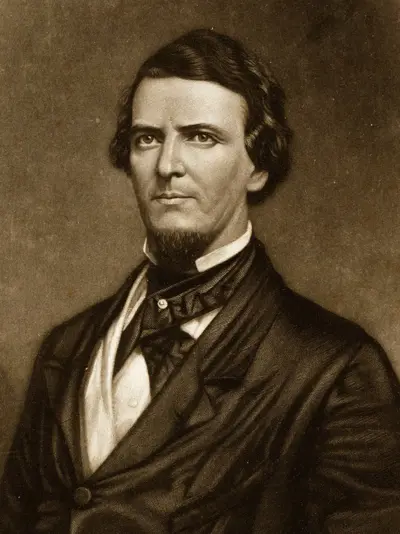
Preston Smith Brooks was an American politician and Member of the U.S. House of Representatives from South Carolina, serving from 1853 until his resignation in July 1856 and again from August 1856 until his death.
