Wendell Willkie Quotes
They are already almost at the boats.
Many Conservatives were afraid of the WWI experience being repeated whereby American soldiers would board boats and sail over to Europe to fight a “European War.” At the recommendation of Chief of Staff General Marshall, Roosevelt had increased the military readiness. The military was woefully prepared. There were not even enough rifles available for the soldiers we had. Willkie exaggerated the preparedness using the metaphor of the American troops sailing off to the European War. That is what happened much later, after Japan bombed Pearl Harbor and Germany declared war on the United States.
Wendell Wilkie, 1892-1944, Republican candidate for President (IN), Statement warning that Roosevelt was being pulled into the Second World War, October 1940
Sourced by: Eigen's Political and Historical Quotations


Coughlin was a great admirer of Adolf Hitler and Benito Mussolini and the Fascists. He was one of the American “heroes” in Nazi Germany, receiving assistance from the Nazi government. Between his anti-Semitism and support for Hitler, Fascism and radical socialism, the Vatican ordered him off the air and shut down his political demagoguery.

Patton always believed that Eisenhower wanted to be President. At the beginning of the war Patton was much senior to Eisenhower, but President Roosevelt promoted Eisenhower above many more senior generals. Eisenhower thought Patton the best fighting general in the army, but a public relations and administrative problem. Several times when he had gone too far, Eisenhower reprimanded him but kept him in his command position. After the fighting was over, Patton became the military governor of part of Germany and was not as successful at peacekeeping and nation building as he was at fighting. Eisenhower was convinced that Patton would destroy himself and get fired by the army command and the President if he continued as governor. Patton confused Eisenhower’s prudent and politic demeanor with the allies as a lack of courage. And Patton could never get over the fact that Eisenhower and never commanded an army fighting in the field. He was jumped to Supreme Allied Commander, in a very bold and brilliant stroke by FDR who passed over many senior generals.

America, England, Germany and France Many Japanese leaders predicted war between the Great Powers while America and its European Allies did not see the danger as clearly. Shortly after 1936, Hitler began the Second World War. Japan was indeed prepared. Hiranuma became one of the Japanese extremists and after WWII was convicted of war crimes and given a life sentence.

Winston Churchill utilized this quotation in his first radio address as Prime Minister, May 19, 1940


Roosevelt had withdrawn his Ambassador to Berlin, publicly reprimanded Joseph P. Kennedy, his Ambassador to England who was pro Fascist and who had said complementary things about Hitler and Mussolini. FDR made anti-German statements to a degree unknown for a country not at war. Hitler publically stated that the Germans would not be pressured. Dictators who U. S. leaders have tried to isolate and pressure, have made similar statements ever since. The American intervention was certainly effective against Hitler.
At that time there were extensive meetings and discussions for the creation of what was to be the United Nations. The negative view of the United Nations or other international security organization is now and always has been held by a vocal minority in the United States.


This was the address where FDR used the “arsenal of democracy” phrase which became so famous. A similar phrase was used in May by Robert E. Sherwood--{624748}. Then Jean Monnet began to use the exact phrase in Mid 1940--{624746}. He almost certainly had read Sherwood’s earlier, similar phrase. However so had Presidential Aid Harry Hopkins who thought that it would be a good phrase for President Roosevelt to use to “brand” the activity of the United States. So diplomatically, Monnet was asked not to use the phrase any more, and he acceded to the request. At the end of the year, FDR gave his address with this quotation.


What is interesting about this quote is that it is very much like many American politicians who support a large and strong military.

The only soldier ever so honored. Marshall was then the Deputy Chief of Staff of the Army. The President was meeting with the Army leadership to plan the nation’s preparedness to come with the Nazi menace. Army brass had wanted to build up large ground forces. However, conservatives (in those days opposed to military spending) accused the Roosevelt administration of fomenting war. FDR wanted to be less visible and opted for a program that would build 7 aircraft factories first and later build ground forces. He asked if all agreed and the army heads all bobbed except for Marshall, then a relatively junior general. FDR never forgot the one general who told him, No, and when War was eminent, he selected Marshall lead the military and promoted him over 34 more senior generals. Great leaders appreciate people who have the courage and integrity to say No to power and FDR had the confidence in himself that he could handle people who disagreed or were difficult. This was one of FDR’s many great appointments.


Lindbergh, a great aviator, was a Fascist who was a great admirer and supporter of Hitler and Mussolini. By this time, even Lindbergh had seen much of the German aggression, and his opposition to the war was on the pragmatic ground that we could not win. He thought that democracy was too unsuited to a country being a major power.


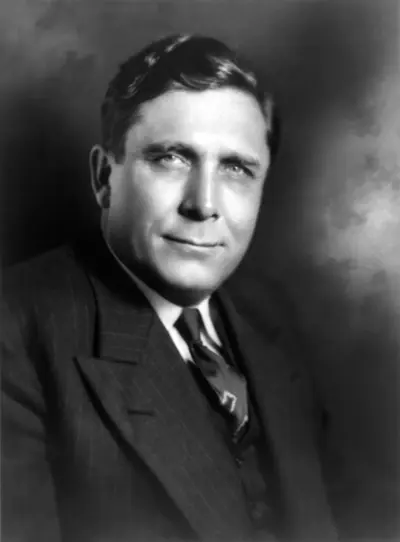
Wendell Lewis Willkie was an American lawyer, corporate executive, and the 1940 Republican nominee for President of the United States. Willkie appealed to many convention delegates as the Republican field's only interventionist: although the U.S. remained neutral prior to Pearl Harbor, he favored greater U.S. involvement in World War II to support Britain and other Allies. His Democratic opponent, incumbent President Franklin D. Roosevelt, won the 1940 election with about 55% of the popular vote and took the electoral college vote by a wide margin.
