Thucydides Quotes
It must be thoroughly understood that war is a necessity, and that the more readily we accept it, the less will be the ardor of our opponents.
Thucydides, c. 460 BC -c. 400 BC, Ancient Greek Historian, History of the Peloponnesian War, Book 1
Sourced by: Eigen's Political and Historical Quotations

What is interesting about this quote is that it is very much like many American politicians who support a large and strong military.


Shortly after the Maine blew up in Havana Harbor:

She was the 5th female member of the House and its first Jewish member. She was the first woman on the House Military Affairs Committee, and was one of the few Republicans who advocated spending for military preparedness. At the time of her service, many Republicans were strict isolationists.


At that time there were extensive meetings and discussions for the creation of what was to be the United Nations. The negative view of the United Nations or other international security organization is now and always has been held by a vocal minority in the United States.

This was written when the United States was not a dominant military power. At the beginning of the 20th century, the U. S. had the same size military as Argentina. It was France, German, Turkey and England who had the military superiority and it was they who tended to find excuses for war. After WWII, the U. S. was dominant and was involved with a number of wars and military incursions, often with nations that had not attacked the U.S. Korns’ principle was most dramatic when the George W. Bush administration invaded Iraq on the excuse that the Iraqis were developing weapons of mass destructions and then might attack the United States. After the successful invasion, the excuse was shown to be hollow as there were no signs of sophisticated weapons development.


With a professionalized all volunteer military, most of whom came from just a few socio-economic strata of our society, wars at the time were fought and the risks and burdens borne by a small part of American society. The rest of society, unlike the Second World War did not experience any change in their style or standard of living.


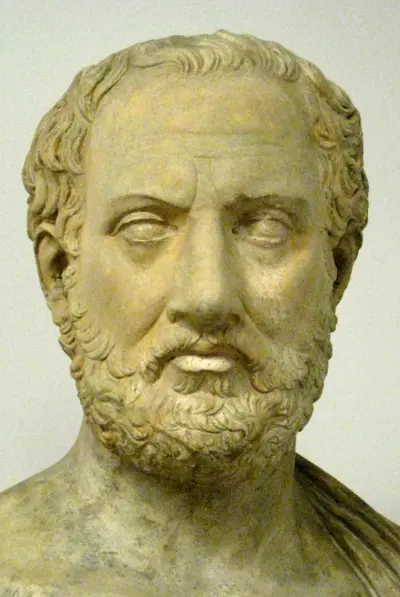
Thucydides (/θjuːˈsɪdɪdiːz/; Ancient Greek: Θουκυδίδης Thoukūdídēs [tʰuːkyːdídɛːs]; c. 460 – c. 400 BC) was an Athenian historian and general. His History of the Peloponnesian War recounts the fifth-century BC war between Sparta and Athens until the year 411 BC. Thucydides has been dubbed the father of "scientific history" by those who accept his claims to have applied strict standards of impartiality and evidence-gathering and analysis of cause and effect, without reference to intervention by the deities, as outlined in his introduction to his work.
