Suzanne Collins Quotes
There's a basis for the war, historically, in the 'Hunger Games,' which would be the third servile war, which was Spartacus' war, where you have a man who is a slave who is then turned into a gladiator who broke out of the gladiator school and led a rebellion and then became the face of the war.
Collins, Suzanne. Interview by David Levithan. "Suzanne Collins Talks About 'The Hunger Games,' the Books and the Movies." The New York Times, 18 Oct. 2018.


Southerners complained that abolitionists were advocating revolution. While most did not, some did advocate mass rebellion. The fact that Remond was himself a Black, created even more distress to the South.


Hunton was an old West Point classmate of Sherman’s and was also a Tennessee slave holder, who wanted his escaped slaves back under the Fugitive Slave Act. Actually, Army Commander McClellan had issued an order just a few days before, prohibiting the Army of returning fugitive slaves to their rebel owners who were guilty of treason. See {619337} Sherman however wrote his friend and made a moral and ethical argument that transcended the law and at the same time pointed out the ethical hypocrisy of the treasonous Confederates.


He stated that he had a vision and made these two prophesies that indeed came true. The first was the South Carolina secession starting the Civil War. The second, when the North used former slaves as soldiers who fought their old masters.


The Southerners were terrified at the thought of runaway and freed slaves as soldiers for the Union Army—even moreso than the Union leadership assumed. The Southerners knew far better than the Northerners how badly the slaves had been brutalized and assumed that the Blacks would want the same kind of revenge that they would seek if the roles were reversed.

This fear was great among many who were abolitionists as potentially there might be mass slaughter of all Southern whites.

South America, invaded and colonized by Spain was a brutal combination of slavery and repression. Even the European colonists suffered under the terrible combination of exploitation, militarism and religious dictatorship. Independence from Spain was equally bloody as unlike in North America where the fight was against British rule, in South America the black slaves, the indigenous Indians and the white colonists all had scores to settle with the Spanish rulers. And the Spanish in turn realized that and brutally repressed all rebellion attempts. Atrocities were common, and committed by almost all, including even idealists like Bolivar.
His fear was well founded. That is exactly what the British tried to do.


The Southern states were illegal rebels. A confederacy had always meant a voluntary association of otherwise independent entities. However technically the Southern states were not independent but in a state of illegal rebellion against the United States. Lincoln, a lawyer, could not being himself to refer to the South by their preferred name—the Confederacy. So this was how he and many in his administration referred to the South.

At the time she was herself in exile in Jordan where she worked with the over 1 million Arab refugees (from both Syria and Iraq) in Jordanian refugee camps. The contrast between the two groups of refugees she found dramatic.
Holland was trying to write a justification of the particularly barbarous and cruel methods of punishing Negro Slaves. These not only included the whippings, but also crucifixion and burning at the stake. To justify these, Holland gave the above example of what had occurred which in his view justified the “law enforcement” techniques that the South used to “protect” its citizens. Holland sent a copy of this essay to James Madison in the hopes that there might be a change of pubic opinion, not only in the Northern states but even in Virginia which looked upon the other Southern States as backward and barbarian. Apparently, Madison did not think enough of the pamphlet of Holland to even write an acknowledgment and/or that you.

President Lincoln and Several of the Commanding Union Generals had declared that black slaves were free during the midst of the Civil War under the legal theory that if the slaves were property of the rebels, then they cold be seized as “contraband” and removed from the control of those who had committed treason. The question was, what would happen to those now free Negroes after the war? Many Negro leaders were anxious that if there were surrender, then the status quo ante might prevail and the Negroes—many have who had fought for the Union might be returned to slavery. This speech by the Secretary of State alarmed them further. This is why the Emancipation Proclamation was so important and even that might have been overturned by a subsequent President. This is why Lincoln, the white radical Republicans and the Black leadership placed so much emphasis on passing the 13th Amendment.
Armstrong was a Union military chaplain with the troops that had captured Petersburg, Virginia. Of particular interest in this quotation is his report on the attitude of the poor whites after the war had destroyed the economy of the area and reduced the former wealthy aristocrats to poverty.
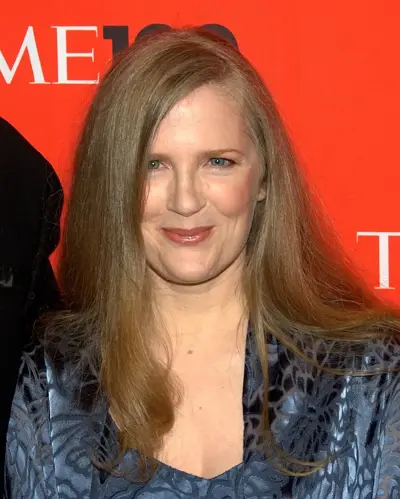
Suzanne Collins is an American television writer and author. She is known as the author of The New York Times best-selling series The Underland Chronicles and The Hunger Games.
