James Joyce Quotes
There is no heresy or no philosophy which is so abhorrent to the church as a human being.
Joyce, James. Stephen Hero. New Directions, 1944.


Mordecai Manuel Noah, 1785-1851, was the first Jewish Ambassador of the United States representing us in Tunisia. However, President James Monroe removed him from office.


While the Visigoths had some very advanced legal principles, this law, quoted in its entirety is typical of the nations that were part of the Catholic world. The church and its doctrines were immune from any possible criticism, explicit or implicit. This is the most formalized and sophisticated compendium of laws of the so-called “barbaric peoples” of Europe. The compilation was in many ways a documentation of the traditional laws of the Visigoths that had evolved over hundreds of years.


Most European monarchies and strong, powerful states were theocratic empires and had as their foundation a ruling family and a national church. In Japan, the churches were politically weak, and so the designers of the Japanese empire created the concept of a divine emperor where spiritual and temporal power could be the embodiment of the state which in their view had to have both dimensions. See Ito’s statement on the subject: {604492}


Of all the Western Colonial Powers, Spain was the worst. They took the most from their possessions and contributed the least. Worst, they killed off almost all the indigenous people.


This quotation is often used to illustrate the complete intellectual conformity that was (and for some still is) required of the Roman Catholic Church. Although this was a theological statement, it is sometimes functionally used as a definition of loyalty to a President or other political figure with respect to staff.


Ingersoll was considered to be the greatest orator and political thinker of his day, but his overt atheistic views curtailed his elected political career.

Note that Madison’s criticism of Christianity is not theological, but humanistic and political. See {620779} for his view on religion in general.
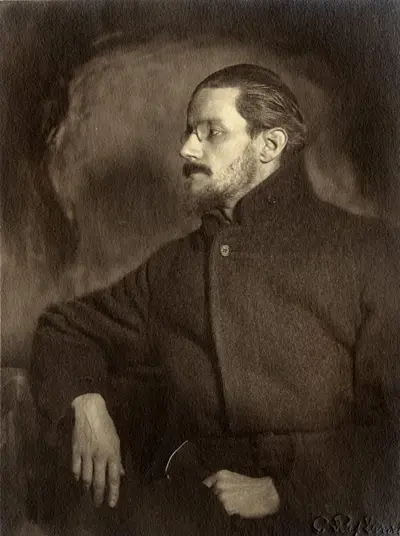
James Augustine Aloysius Joyce was an Irish novelist, short story writer, poet, teacher, and literary critic. He contributed to the modernist avant-garde movement and is regarded as one of the most influential and important writers of the 20th century. Joyce is best known for Ulysses (1922), a landmark work in which the episodes of Homer's Odyssey are paralleled in a variety of literary styles, most famously stream of consciousness. Other well-known works are the short-story collection Dubliners (1914), and the novels A Portrait of the Artist as a Young Man (1916) and Finnegans Wake (1939). His other writings include three books of poetry, a play, his published letters and occasional journalism.
