Arnold J. Toynbee Quotes
It [industrial capitalism] came to be believed in as a gospel, ... from which it was regarded as little short of immoral to depart.
Arnold J. Toynbee, 1852-1883, English Economic Historian & Reformer, Uncle of Historian Arnold J. Toynbee, Quoted in Wikipedia, “Arnold J. Toynbee”, http://en.wikipedia.org/wiki/Arnold_Toynbee
Sourced by: Eigen's Political and Historical Quotations

Li was one of the leaders urging force to repress the demonstration. He was particularly offended by the Chinese students carrying the large “Statue of Liberty,” believing that this was an overt attempt to destabilize China. This was not known till the publication of the so-called “Tiananmen Square Papers” in 2001. The Chinese government claimed that these were forgeries.


Ardent socialists make the same complaint—that critics often compare realistic socialist societies with capitalist utopias, and they conclude when reality is considered, socialism is the better system.


In the late 19th century, the Sherman Antitrust Act was passed to control vicious monopolies and trusts. There were many who thought that this would be philosophically incompatible with the doctrine of free enterprise. James observed that the American philosophy required the testing of each doctrine and in the case of monopolies, the results were destructive for consumers, competitors, and society in general, with the monopolist the only beneficiary of the free enterprise where consumers and competitors lose their freedom.

If someone repeats a lie, you can show them the logic and facts of the situation and persuade them often. But if they are ideologically wedded to an idea, it is difficult if not impossible to change their mind, as their belief is an ideology, not a conclusion.

In 1877 Wasburn was dropped from the List of Ministers by the Unitarian Church. He had become quite atheistic.
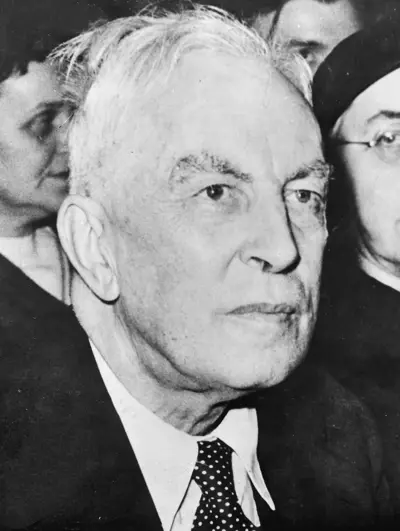
Arnold Joseph Toynbee CH FBA was a British historian, a philosopher of history, an author of numerous books and a research professor of international history at the London School of Economics and King's College London. From 1918 to 1950, Toynbee was considered a leading specialist on international affairs.
