Thomas Wentworth, 1st Earl of Strafford Quotes
There is a nation of the Irish, the whilst, that wander abroad, most of them criminous, ail-lewdly affected people that, forth of an unjust yet habitual hatred to the English Government, delight to have it believed, and themselves pitied as persecuted forth of the country, and ravished of their means for their religion only, stirring and inciting all they can to blood and rebellion
1st Earl of Strafford
Thomas Wentworth, 1593-1641, Member of English Parliament, Lord Deputy of Ireland, Letter to Cox, 1637
Sourced by: Eigen's Political and Historical Quotations

Before the Protestant Reformation of Martin Luther, there had been a schism of the Catholic Church into the Western Roman Empire—the Latins, headquartered in Rome; and the Orthodox Church—the Greeks, headquartered in Constantinople (Byzantium). One of the main issues of the schism was the Papacy itself. As this quotation shows, Luther was by no means the first to attack the Papacy. Saint Mark’s quotation here was more than 50 years before Luther was born.

Odo of Chatillon-Sur-Marne. This is an amazingly distressing quotation for most moderns. Here we have the Pope preaching genocide and ethnic cleansing. This was one of the main triggers of the bloody Crusades and is not forgotten by Muslims in the Middle East Today. As Islam has not changed a great deal in 1000 years, most Muslims assume that the same is true of Christianity and especially the popes and the Roman Catholic Church. This is one of the reasons that the Islamic world reacts so strongly when a pope makes any statement negatve about Muslims and Islam.

What the historian did not know was how similarly the Protestants would behave against the Catholics when they had the power. Since the Catholics were the established church, and the Protestants the new “heretics” the Protestants were on the receiving end of most of the atrocities at the beginning. However, as if they had been scholled by their horrible experiences, they repeated them just exchanging the perpetrators and the victims.

The implication of a double moral standard for adherents of the faith and for others has been characteristics of many religions.

There is of course no way to tell the sect of a Muslim by physique alone, although there are major behavioral differences. The reason the quotation was newsworthy was that it was amazing that a senior Senate leader was so ignorant of such a critical and problematical subset of the world.

It was not until 1780 that Catholics were allowed to even be members of Town Corporations.

Disraeli was the 1st Earl of Beaconsfield


Many Protestant Englishmen were shocked to hear this, having little familiarity with the details of the functioning of the Church of England—the Established Church of Great Britain—in Ireland and the contribution of the Church to the discrimination against Irish Catholics and the poverty of Ireland.


Wesley had been to Island several times and was interested in affairs there. He was a strong advocate of freedom of religion but the violence of the earlier religious conflict made him very wary of the Irish Roman Catholics who seemed to him particularly prone to religious violence.

There has been a similar demographic condition since.


As a result of Henry VIII establishing himself as the head of the Church in England and Ireland in place of the Pope, Henry’s heirs also became head of the Church. And that was the role that Queen Elisabeth had inherited in addition to the Crown. Many of those loyal to the Pope found most offensive the fact that a woman was making decisions for men and women on matters of faith. A Papal representative travelled with FitzGerald and probably helped him compose this document of which this is but 2 sentences. He may have drafted it completely. The Pope was a factor in many of the Irish rebellions against the English, and this caused great suspicion of all English Catholics whose loyalty to the Queen was in conflict with their loyalty to the Pope who was plotting for a Catholic takeover of England and Ireland.
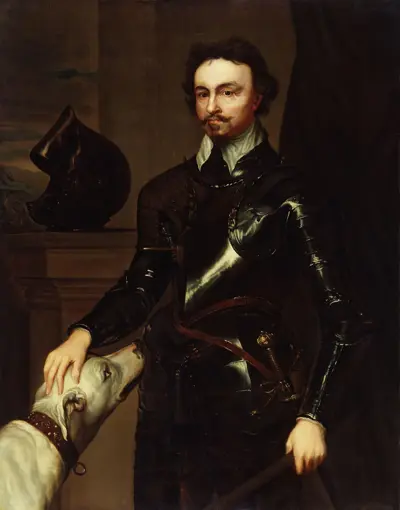
Thomas Wentworth, 1st Earl of Strafford, KG was an English statesman and a major figure in the period leading up to the English Civil War. He served in Parliament and was a supporter of King Charles I. From 1632 to 1640 he was Lord Deputy of Ireland, where he established a strong authoritarian rule. Recalled to England, he became a leading advisor to the King, attempting to strengthen the royal position against Parliament. When Parliament condemned Wentworth to death, Charles reluctantly signed the death warrant and Wentworth was executed.
