Richard Crossman Quotes
Once [Irish] Catholics and Protestants get used to our presence they will hate us more than they hate each other.
Richard Crossman, 1907-1974, British Member of Parliament (Labor), Diary, August 17, 1969
Sourced by: Eigen's Political and Historical Quotations

It was not until 1780 that Catholics were allowed to even be members of Town Corporations.

First Irish Bishop in the United States and the First Catholic Cardinal of New York. Moscow had just been burned by the French. No New York Catholic churches were harmed.

In April of 1689, Protestant William of Orange landed in England against Catholic King James I, in a Catholic-Protestant civil conflict which not only affected England but its colonies as well. The Governor and Lieutenant Governor of New York City were confused and wary as to taking immediate sides, but there was a strong anti-Catholic movement in New York City. This group, functioning as “The General Convention for the Province of New-York,” elected Leysler, its leader—later appointing him Lieutenant Governor of New York. Leysler’s forces seized the government and imprisoned the King James Appointed Officials who would not turn against James. Leysler actually governed New York for almost two years. The old guard of New York, after William had been crowned King, attempted to regain the status quo ante. Leysler and his extremist followers saw them as traitors and Papal supporters although they themselves were English Protestants. But their appointment, loyalty and wavering regarding James I made them traitors in the view of Leysler. When initial troops tried to regain power for the original governor and council Leysler, he simply dismissed them as Papists. Finally, in March of 1691 Governor Slaughter, arrived with more troops, and after a significant Battle for New York, captured Leysler and his major followers where were executed shortly thereafter. This incident, sometimes referred to as “Leysler's Rebellion,” represents these American “firsts.” First successful revolution in America; First military coup; First military dictator. First successful counter-revolution. There were some contemporary critics who thought Leysler as interested in custom duties as Papists.

What the historian did not know was how similarly the Protestants would behave against the Catholics when they had the power. Since the Catholics were the established church, and the Protestants the new “heretics” the Protestants were on the receiving end of most of the atrocities at the beginning. However, as if they had been scholled by their horrible experiences, they repeated them just exchanging the perpetrators and the victims.

A force of 4,000 Spaniards, aided by Irish Catholics attempted to thwart the English Protestant Reformation forces in Ireland. They were defeated in their war by Lord Mountjoy. This is one of the many wars in history that was described as “holy” by one or both of its participants.
Many Protestant Englishmen were shocked to hear this, having little familiarity with the details of the functioning of the Church of England—the Established Church of Great Britain—in Ireland and the contribution of the Church to the discrimination against Irish Catholics and the poverty of Ireland.

There has been a similar demographic condition since.


The report was praised by some of the intellectuals of Pakistan and most of the non-Islamic world. However, Pakistan the discussion of each of the cleavages, instigated the public passion of the cleavage and nothing significant was done.


French Protestants—Huguenots—were looking to the New World to establish a Protestant state in which they could practice their religion. They sent an expedition to the St. Johns River area of modern-day Florida and began a colony near what is now the city of St. Augustine. The Spanish sent Pedro Menendez and over 1000 troops.

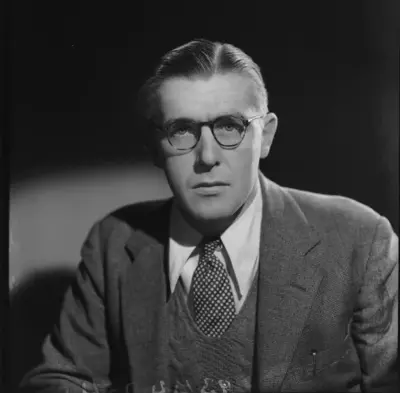
Richard Howard Stafford Crossman OBE, sometimes known as Dick Crossman, was a British Labour Party politician. A university classics lecturer by profession, he was elected a Member of Parliament in 1945 and became a significant figure among the party's advocates of Zionism. He was a Bevanite on the left of the party, and a long-serving member of Labour's National Executive Committee (NEC) from 1952.
