Barbara Ehrenreich Quotes
There can be no more ancient and traditional American value than ignorance. English-only speakers brought it with them to this country three centuries ago, and they quickly imposed it on the Africans--who were not allowed to learn to read and write--and on the Native Americans, who were simply not allowed.
Ehrenreich, Barbara. The Worst Years of Our Lives: Irreverent Notes from a Decade of Greed. Pantheon Books, 1990.

Carson was one of the few Indian Agents who spent every penny of his budget on the Indians as opposed to himself. He was married to an Indian woman and was close enough to many Indians that he understood their resentment whenever they came into a town. They were treated terribly and while most of them were literally starving, seeing the white opulence produced resentment.


Johnson strongly urged white contact with the Indians in the Indian communities, He himself married an Indian Woman.


Gold had been discovered in the Black Hills lands that were sacred to the Lakota Sioux and were reserved for exclusive use of the Indians by the Fort Laramie Treaty. Greedy whites, ignoring the treaty provisions not only entered the Black Hills to pan and mine for the gold, but killed many Indians they ran across Sherman was angry and wrote to his old friend President Grant. Grant, now a political, had to contend with public opinion that thought it absurd that gold should not be mined because a few Indians regarded the land as sacred. Meanwhile Grant was working with a few others to portray minor clashes between whites and Indians in the Black Hills as violent and dangerous Indians breaking the treaty.


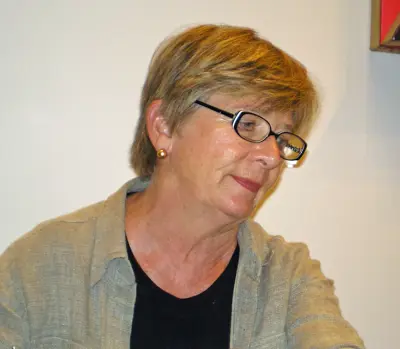
Barbara Ehrenreich is an American author and political activist who describes herself as "a myth buster by trade" and has been called "a veteran muckraker" by The New Yorker. During the 1980s and early 1990s she was a prominent figure in the Democratic Socialists of America. She is a widely read and award-winning columnist and essayist, and author of 21 books. Ehrenreich is perhaps best known for her 2001 book Nickel and Dimed: On (Not) Getting By in America. A memoir of Ehrenreich's three-month experiment surviving on minimum wage as a waitress, hotel maid, house cleaner, nursing-home aide, and Wal-Mart clerk, it was described by Newsweek magazine as "jarring" and "full of riveting grit," and by The New Yorker as an "exposé" putting "human flesh on the bones of such abstractions as 'living wage' and 'affordable housing'." She is a recipient of a Lannan Literary Award.
