Frantz Fanon Quotes
The settler makes history and is conscious of making it. And because he constantly refers to the history of his mother country, he clearly indicates that he himself is the extension of that mother country. Thus the history which he writes is not the history of the country which he plunders but the history of his own nation in regard to all that she skims off, all that she violates and starves.
Fanon, Frantz. The Wretched of the Earth. Translated by Constance Farrington, Grove Press, 1963, p. 51.

The Newspaper acknowledged that the conquest of Mexico was tantamount to a rape, but the editors were convinced that the Mexicans would be very happy once they were in the American orbit. In almost every case in American history where we invaded and occupied a country, the political leadership, most of Congress, and many American citizens were convinced that American freedom and democracy were so much better than any other form of government that the conquered people would not only welcome the Americans but would voluntarily reorganize their governmental structures to have a democracy. While there were always some people in each country who did feel that way, the majority rarely did, much to American surprise.


The poem was written to urge the United States to annex the Philippines.

The planners of this particular war effort involved many ideologically correct supporters of a neo conservative agenda from the United States and the other Allies more knowledgeable diplomats and military people were kept our of the effort lest they disagree with administration ideology or policy. The result was a very badly mismanaged occupation phase of the war after a very well managed invasion effort.


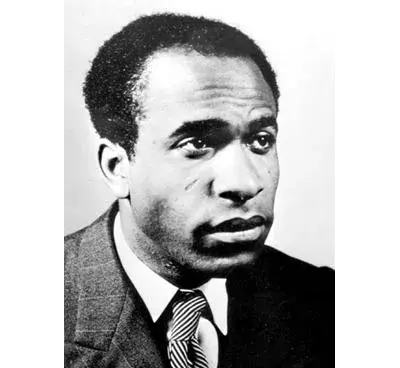
Frantz Omar Fanon, also known as Ibrahim Frantz Fanon, was a French West Indian psychiatrist and political philosopher from the French colony of Martinique (today a French department). His works have become influential in the fields of post-colonial studies, critical theory and Marxism. As well as being an intellectual, Fanon was a political radical, Pan-Africanist, and Marxist humanist concerned with the psychopathology of colonization and the human, social, and cultural consequences of decolonization.
