William Eaton Quotes
Their armies [the Ottoman Turks] are encumbered with immense baggage, and their camp has all the conveniences of a town, with shops etc. for such was their ancient custom when they wandered with their hordes.
Eaton was in the Middle East and at the time that region was a part of the Ottoman Empire controlled by the Turks.
William Eaton, 1764-1811, Diplomat, Army Officer, American Consul in Tunis, A Survey of the Turkish Empire, 1799
Sourced by: Eigen's Political and Historical Quotations

Gates had been assigned to take over command of the Southern Department which was a total mess with no provisions or money. He took over from General Lincoln {49731} who had failed for lack of resources and support and then Gates’s career was almost destroyed by the same problem.


The French and English, with larger numbers and more experienced troops and officers, wanted the American units to come under the command or their officers and be integrated into the allied army. However Wilson established the tradition that American troops fighting abroad most always fight as an American Army under American Command. Although resented then and into the 21st century by America’s allies who are expected to fight under American command, it is a tradition that no American major politician has seriously challenged since then.


The President was distressed to hear that the Confederates had captured some horses and a Union general. He seemed more distressed about the horses. A copy of this quotation was given to Colin Powell when he was promoted to brigadier general.

From the beginning, the issue of whether the country should have a standing army or depend on the militia and the citizen soldier has been controversial. There is a , romantic American myth about the Militiamen in Colonial and Revolutionary America—the citizen soldiers who would leave their farms and rise to the military necessity of the day. However, not only were the militia very hard to muster to duty, but most actually didn’t own or have experience with firearms, and the prevailing opinion of knowledgeable military leaders from George Washington on down was that the militia were not very good soldiers. See {613015}, {613016}, {613022}, {613027}, {621987}, {621988}, {613030}, {613033}, & {613056}


Ataturk, the great Turkish reformer, was interested in Turkish independence, development, and reform, but was uninterested in the day-to-day administration of government. He knew it had to be done and wanted his friend to be Prime Minister and run the government. Orbay realized that Ataturk would still be the major power in the nation.

The Ottoman Turks had just conquered the city of Constantinople including the Eastern Roman Empire in their domain. They would be the dominant power in the area until the First World War when they made the mistake of siding with the Germans and the Ottoman Empire was broken up in the Treaty of Versailles.


Greece had always coveted Anatolia which was a part of the Ottoman Empire but had been in antiquity a Greek dominated area. Further, people of Greek ethnicity and culture, who hundreds of years ago use to be the vast majority were after the hundreds of years of Ottoman rule and migration were then the largest minority in Anatolia. After the Turks lost the First World War as a consequence of their allying with Germany, and had been stripped of its Arab territories and was determined to keep the territories that they still had. Also, Turkey had just undergone a revolution and the old order was displaced. Venizelos and the Greeks saw this as an opportunity to get back Anatolia and sent a military invasion force to land at Smyrna (Ismir to the Turks), the largest city of Anatolia where despite the Greek minority in all of Anatolia, Greeks were a small majority in Smyrna and many of the ethnic Greeks not only aided the Greeks once they had landed but participated in atrocities against the minority of Turkish Muslims of Smyrna. The Ambassador was then trying to rationalize the heavy hand with which the Turks dealt with the indigenous Greeks many of whom were guilty and many of whom were not.


This is a very important quotation because it and {641523} show the great difficulty that Washington was under and the fact that he repeatedly asked Congress for assistance very little of which was provided.

Mechanics was a general term for people who made things, or fixed things. Ramsay was the first major historian of the American Revolution.
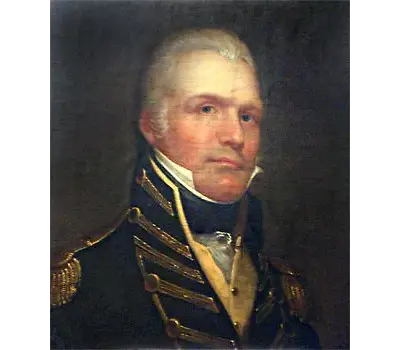
William Eaton was a United States Army officer and the diplomatic officer Consul General to Tunis (1797–1803). He played an important diplomatic and military role in the First Barbary War between the United States and Tripoli (1801–1805). He led the first foreign United States military victory at the Battle of Derne by capturing the Tripoli subject city of Derne in support of the restoration of the pasha (local monarch), Hamet Caramelli. William Eaton also gave testimony at the treason trial of former Vice President Aaron Burr. He served one term in the General Court of Massachusetts (state legislature). Eaton died on June 1, 1811 at the age of forty-seven.
