Francis Bacon Quotes
The voice of the people hath some divineness in it, else how should so many men agree to be of one mind?
1st Baron Verulam
Francis Bacon, 1561-1626, Lord Chancellor of England, De Dignitate et Augmentis Scientiarium, 1623
Sourced by: Eigen's Political and Historical Quotations

See Walter Reynolds {32317} for a later English version. Also, Alcuin of York {593018} and William Tecumseh Sherman for an opposite view using a similar phrase. Hesiod's seems to be the earliest version of this idea that is with us today.


This quotation is almost always given as if it were Alcuin who advocated listening to the people, when actually his view was just the opposite. See William Tecumseh Sherman for a more modern expression of the same view. Also, Walter Reynolds {32317} for an opposite view, but using a similar phrase. Note that since he was referring to what "the people" say, the quote must have been in common usage in the 9th century. For the earliest known use of the statement in Western civilization, see Hesiod {603399}.


Statement regarding the situation the Mormons encountered where the majority of the citizens in the areas that they inhabited were not only opposed to Mormonism but felt it moral to attack, harass and even murder Mormons. Because the bigots were in the majority, the politicians and officials were loath to protect the Mormons. In Mormon religious prophesy, before the Second Coming of Christ the Mormons must settle in Zion and the Jews in Israel. So the persecution preventing them from settling in Zion was the work of Satan to prevent Christ’s coming.


The Latin means “the voice of the people is the voice of God.” See Alcuin if York {593018} for a quick history of the statement. Essentially, in science public opinion is irrelevant or at least should be. One of the major political issues in our society is whether ideology and/or public opinion should control policy and practice of scientific issues, methods, and practices.


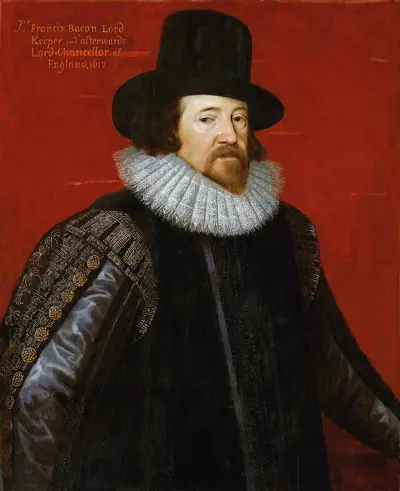
Francis Bacon, 1st Viscount St Alban, Kt PC QC, also known as Lord Verulam, was an English philosopher and statesman who served as Attorney General and as Lord Chancellor of England. His works are seen as developing the scientific method and remained influential through the scientific revolution.
