Quintus Ennius Quotes
The Roman state stands by ancient customs, and its manhood.
Ennius, Quintus. The Annals of Q. Ennius. Edited by Otto Skutsch, Clarendon Press, 1985, p. 88.


Most immigration reformers want to open immigration more widely. Ward wanted immigration restricted to certain ethnicities and limited. He wanted a uniformity of assimilation and not diversity.

Note the belief that the author has the belief that over time homogeneity is important in a state, whereas the most successful modern states have been ones that are diverse—i.e. America, Britain, China, France. There have been some small successful states like Norway that are homogeneous, but large states need the heterogeneity.
See {640102} and {640101} for his view of what a nation is not.
See {640101} for his view of the relationship between language and nationality and {640100} for his definition of a nation which is what most people use.


Historically, these were not countries like Egypt, Tunisia, Morocco or Iran. They were created artificially by the European powers in the 20th century.
This statement was more than a proverb but a popular political doctrine as well which had for years destabilized the Balkans. From the Serbian point of view, if a Serbian family moved to Bosnia or another country, their family land and their decedents were Serbian and under the governance of Serbia. Where there were enclaves of Serbs, they and the Serbian Government considered that land Serbian. This attitude even widely prevailed into the 21st century and led to the U. S. War with Serbia over the Serbian attempts to control parts of neighboring countries where Serbs were in the minority. The Serbs were not unique in this respect. Germany, in WWI, had seized territory from France because there were large enclaves of Ethnic Germans in the Sudetenland. The Ancient Romans likewise asserted the protection of Roman Citizens anywhere in the known world.


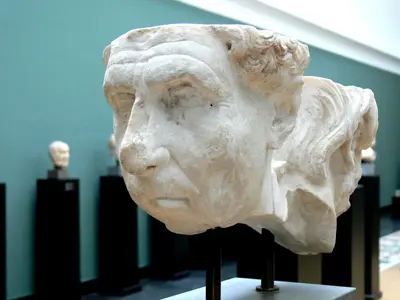
Quintus Ennius (Latin pronunciation: [ˈkᶣiːnt̪ʊs̺ ˈɛnːijʊs̺]; c. 239 – c. 169 BC) was a writer and poet who lived during the Roman Republic. He is often considered the father of Roman poetry. He was born in Rudiae, formerly a small town located near modern Lecce in the heel of Italy (ancient Calabria, today Salento), and could speak Oscan as well as Latin and Greek. Although only fragments of his works survive, his influence in Latin literature was significant, particularly in his use of Greek literary models.
