Henry Hallam Quotes
Nothing is more difficult, in general, than to make a nation perceive anything as true, or seek its own interest, in any manner but as its forefathers have opined and acted.
Henry Hallam, 1777–1859, English Historian, Quoted in S. Austin Allibone, Prose Quotations from Socrates to Macaulay, 1880
Sourced by: Eigen's Political and Historical Quotations


Democracy and a republican form of government ran counter to the Chinese customs and failed, with Yuan Shikai taking all power—the “immemorial custom” of the autocratic Mancho and earlier Chinese dynasties. This failure of republican government in China so colored the future Chinese political leadership that both the Communists and Chang’s Kuomintang Nationalist anti-communists were both dictatorial and autocratic with great power lying in military hands. It was only in the later years of the 20th century that the Nationalists began to have a real democracy and although the Communists became avid capitalists and loosened up in terms of economic freedom, they did not feel the Chinese masses were ready to accept anything but the authoritarian political system that was the Chinese “immemorial custom”. They would not risk another collapse of modern government and all the factions fighting for control as in the Republic failure.

5th Earl of Rosebery. At this point in history, America was growing rapidly, but had not yet become a dominant superpower. Rosebery was prescient enough to realize that although England was the great superpower of the time, the very conservative values were holding the nation back. He saw America as the model, even when England was still the dominant empire in the world.


Although most conservatives were and are ardent admirers and followers of Mises, he was not so enamored with them. “Conserving” the status quo was to him totally futile as change was always pervasive. See {632403}.
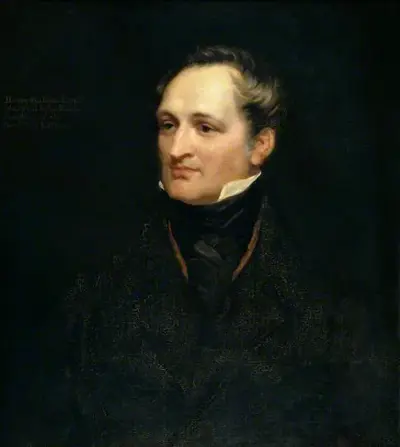
Henry Hallam FRS FRSE FSA was an English historian. Educated at Eton and Christ Church, Oxford, he practised as a barrister on the Oxford circuit for some years before turning to history. His major works were View of the State of Europe during the Middle Ages (1818), The Constitutional History of England (1827), and Introduction to the Literature of Europe, in the Fifteenth, Sixteenth and Seventeenth Centuries (1837). Although he took no part in politics himself, he was well acquainted with the band of authors and politicians who led the Whig party. In an 1828 review of Constitutional History, Robert Southey claimed that the work was biased in favour of the Whigs.
