John Hay Quotes
The Republic of Panama grants to the United States in perpetuity the use, occupation and control of a zone of land and land under water for the construction maintenance, operation, sanitation and protection of said Canal of the width of ten miles extending to the distance of five miles on each side of the center line of the route of the Canal to be constructed
John Milton Hay, 1838-1905, U.S. Ambassador to Great Britain, U. S. Secretary of State (Republican), Assistant and Secretary to the President [Abraham Lincoln], Hay-Bunau-Varilla Treaty, November 18, 1903
Sourced by: Eigen's Political and Historical Quotations

The French had a plan to construct a canal across Panama.


We didn’t exactly pay for the rights to build the Canal but we did pay for the construction. See linked quote for a quotation regarding the acquisition of the Canal Zone. It became a heated internal American debate where the right wing did not want to turn the canal over to Panama claiming that the Panamanians could not operate the canal properly and the Chinese would obtain control. Ford started the process and Jimmy Carter signed the agreement.


A local pilot who knew the local waters was necessary to help a large ship to dock in a port. Most of the pilots were patriots and those who weren’t were intimidated by the Continental Congress and the patriots in the community. At this point there was no formal battles yet of the Revolution. The British authorities were really angered that they could not safely land a British ship in the ports of their own colonies. This is another example of the American Revolution starting before the battles of 1776.

The whites had constantly encroached on the Cherokee land which was too large for any reasonable patrolling by the Indians themselves. The Federal government persuaded the Cherokee to sign a treaty by which the Indians would give up their title to the larger part of their land. The most important quid pro quo was that the Federal Government would protect the remainder of the Cherokee land from incursion by whites or even other Indians. However, whites who coveted the land started to encroach and build farms and ranches. The Federal government was reluctant to use American soldiers against American citizens and was looking for a way out. However, the Cherokee chiefs were reminding them of their obligation. The state governments were less concerned about Federal treaties, and Georgia passed a law that said that all the Cherokee land must be governed by State Law contrary to the Treaty which gave the Cherokee total sovereignty. But the Feds were not anxious to have a showdown with the states on this issue. Whites, with the connivance of the state governments and the support of some Federal Officials offered to amend the treaty with the Cherokee. The whites would pay the Indians fair market value for their land in the East. The Federal Government would provide equal amount of land in the Indian Territory of Oklahoma, then a territory. The Feds would assist with the relocation and provide troops to protect the Cherokee from thieves and raiders—whites and Indians, and would guarantee that the Cherokee would be completely sovereign in the new land. The chief’s did not want to renegotiate the old treaty—they just wanted it enforced. The Supreme Court ruled in their favor, but President Jackson, ignored the ruling and forced the Cherokee onto the Trail of Tears for Oklahoma and the whites took over the valuable Cherokee land.

America’s oldest foreign policy problem has been freedom of the seas for American shipping. Since the end of WWII, the U. S. however performed this function—and pays for it—for the entire world with some minor exceptions.

Holland was then a Republic and federation of the separate states. Each elected representatives to the ruling legislature, however, many states had not been pleased that their representatives did not reflect the desires and public opinion in the individual states and in some cases took bribes to vote in favor of special interests. The Dutch did NOT want their representatives to use their own judgment but wanted them to seek and follow the instructions of the legislatures of each state.
In 1942 it was clear that India would be given its independence soon. There were a number of sticky problems in doing so. One was the fact that when the British came to India, all the states were ruled by Maharajas (Princes, Kings, etc.). The British signed treaties with almost all of them guaranteeing to protect and preserve their local powers in exchange for acceding to British Rule of the national government. But when it came time for independence, democracy was the mode—even in England. The Maharajas insisted that the British leave them with their control of their states as they had agreed, as opposed to creating democratic government at the state level. In the final analysis, the Maharajas lost all their governmental functions and privileges but were able to retain much of their wealth.


The United States had no navy at that point.

Under the treaty between Ireland and England that created the Irish free state, in case of war or other contingency, the Irish Free State was required to allow Great Britain to use specific seaports. However, De Valera hated the English, originally opposed the treaty, and was adamant that the Irish Free State be neutural in WWII. He therefore refused to fulfill the Irish obligation. For Churchill this was the last chance for De Valera to show that the Irish Free State was a real nation with rights and obligations. Interestingly, although De Valera did not want to assist the British fighting the Germans, over 70,000 Irishmen went to England and Volunteered to fight on the British side. There were Irish batallions fighting on the allied side but the Irish Free State was neutural. De Valera made matters worse when he allowed German agents into the Irish Free State to try and go from there to England as well as set up observation posts to guide German bombers attacking the populated city of Belfast and other parts of Northern Ireland. See {639724} for Chirchill’s later reflective commentary on the situation.

The “proofs” were diplomatic assurances—treaties—that England would guarantee the territorial integrity of Belgium. The British made strong diplomatic efforts to persuade Germany not to occupy Belgium. The German’s none the less send armies in under the excuse that if they did not, the French would occupy the country and have a strategic advantage over them. Diplomacy could do no more good. England had to send troops or renege on its obligations. So England was in WWI.

England is entering the war against Germany The German war plan called for attacking France through Belgium. However, Belgium was intent on remaining neutral. International law prohibited a neutral country from allowing troops of either side to enter and maneuver in its territory. ({642178}). When Germany moved into Belgium, the Belgians resisted. England had a treaty with Belgium that it would protect Belgian neutrality in the event of any war in Europe. England then sided with Belgium {642175} and committed to send troops to help Belgium oust the Germans. The Kaiser was furious and could not understand that the English would go to war when there was no economic need or advantage for them to do so. Wilhelm II did not have much respect for treaties, promises, or honor other than military honor. He had earlier convinced himself that the English would not fight for a scrap of paper, especially in a land war. {642105}

The Ship was British but a passanger ship. Over 1000 civillians were murdered, including 128 Americans. This moved American public opinion towards entering the war against Germany which soon thereafter ocurred,


The treaty was ratified by the Senate on March 7, 1796. Much of the text was actually drafted by Joseph Donaldson, a junior diplomat appointed by Humphreys.

Inscribed in the John Adams Building of the Library of Congress. On this subject Jefferson was in agreement with George Washington {37176} and his political opponent, John Adams {592705}.
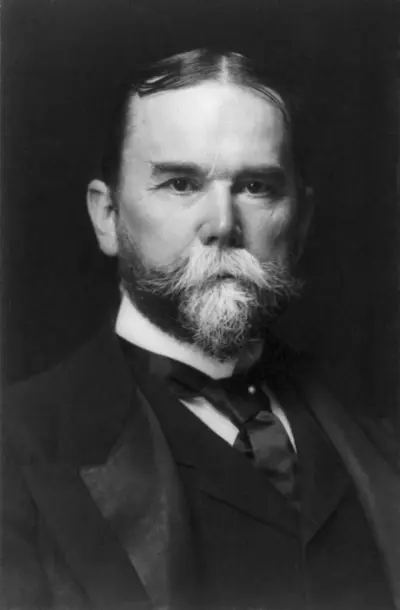
John Milton Hay was an American statesman and official whose career in government stretched over almost half a century. Beginning as a private secretary and assistant to Abraham Lincoln, Hay's highest office was United States Secretary of State under Presidents William McKinley and Theodore Roosevelt. Hay was also an author and biographer, and wrote poetry and other literature throughout much of his life.
