David Humphreys Quotes
No Commander of any Cruiser belonging to this Regency shall be allowed to take any person of whatever Nation or denomination out of any Vessel belonging to the United States of North America in order to Examine them or under presence of making them confess any thing desired neither shall they inflict any corporal punishment or any way else molest them.
The treaty was ratified by the Senate on March 7, 1796. Much of the text was actually drafted by Joseph Donaldson, a junior diplomat appointed by Humphreys.
David Humphreys, 1752–1818, United States Commissioner Plenipotentiary for Algerian Affairs, Minister Plenipotentiary to Spain, Secret Agent, Treaty of Peace and Amity with Algeria, September 5, 1795
Sourced by: Eigen's Political and Historical Quotations

At the time, the Muslim nations of the Barbary Coast commonly seized merchant ships anywhere in the Mediterranean and other oceans. They would sell the cargos, enslave the Christian crews and passengers and then demand ransom for the ships and the freedom of the slaves. However, if nations paid each of the rulers of three countries--Morocco, Algeria & Tunisia--enough annual tribute, ships of the paying nation would not be molested. The European Maritime powers paid the tribute rather than go to war. However, this became a political controversy in the U.S. John Adams and many others wanted to pay the tribute. Jefferson and still others, argued that such tribute should never be paid and war was preferable. This treaty, negotiated by Donaldson and the Algerian Ruler, was a great victory for Jefferson as no tribute would be paid by the U. S.—the only country so exempted. However, it took an invasion of Tripoli lead by U.S. Marines and a massive naval bombardment of Algiers to ‘persuade’ the ruler of Algeria to sign the treaty. Later, the Barbary pirates reneged, and the U. S. did pay a tribute rather than have another war. They did however, pay less than the European powers.

The treaty to which he referred was The Convention against Torture and Other Cruel, Inhuman or Degrading Treatment or Punishment. During the George W. Bush administration the CIA had tortured 3 captives in the War on Terror. The CIA destroyed the video tapes of the torture sessions and many Americans wanted President Obama to investigate and prosecute the torturers in accordance with the requirements of the treaty when there is a torture incident. However, a major ethical and legal complication was that the Bush Administration had issued an official legal memorandum to the CIA which said that the forms of torture that they used, water boarding, was not legally torture. Most legal scholars agree that this legal opinion was incorrect and America had previously prosecuted and punished the few American soldiers who had used Waterboarding. President Obama decided that since the CIA torturers, had been authorized in writing, that a criminal prosecution would be unfair. He also declined to have the Justice Department investigate the torture incidents, Many disagreed, and this quotation summarized their point of view. See {642428} for some of the language of the Convention.


In the 18th Century, the Islamic Barbary States combined their religious beliefs for Jihad against non believers with a classic criminal enterprise. They would authorize cosairs to outfit ships and attack Christian merchant ships on the high seas. They would capture the ship and the cargo, which would be split with the ruler of the country. The crew and passengers would by “rented out” as slaves until they would be ransomed, the proceeds of which would also be shared. To motivate a larger ransom, the captives were regularly tortured as well as worked almost to death. The Barbary Pirates encouraged the “slaves” to write to their relatives, friends and governments to try and raise the ransom. O’Brien’s ship was captured in 1785. He had been a slave for 4 years when he wrote this. See {623704} for a quote from a letter he sent Congress. Finally, after 10 years, O’Brien and those of his crew that were still alive were finally freed. O’Brien’s unusual experience and knowledge of the Barbary States qualified him as an expert and he was then appointed Consul-General to Algiers. Individual Christian countries were offered a “treaty” whereby for an annual payment of tribute to the Barbary country, the corsairs of that country would not attack ships flying their flag. The Christian country had to make 4 different tribute payments to each of the Barbary nations. Most of the European powers were paying the tribute even though some could easily defeat the Corsair navies in a war. The cost of outfitting a fleet for war was much more costly than paying the tribute. The new nation of the United States was good pickings for the Barbary pilots and there was a period of several decades where the Americans had to create a policy to pay tribute or go to war. At different times America did both.
William the Conqueror. This is one of the first if not the first nationwide abolition of capital punishment in history. Ironically, the two alternatives that the abolition law allowed would both be illegal and repugnant to us today even though we allow capital punishment.

After the assassination of Egyptian President Anwar Sadat hundreds of Egyptian religious fundamentalists were rounded up, jailed and tortured. al-Zawahiri broke under torture and revealed the names of some of his anti-government associates. Although he was not personally involved in the murder of Sadat, he served three additional years in jail. Motivated by has thirst for revenge at his torturers and his guilt at having been forced to betray his friend, he learned all he could about terrorism from the older Jihadists also in the same jail, and when he was released he elevated Islamic terrorism to another level by developing a strategy for the use of suicide bombers.

The Constitution was not drafted until 1787 and was ratified later. In the interim the young United States functioned under the Articles of Confederation, in a sense, our first Constitution. This clause established that the Federal Government should have the exclusive power and authority to conduct foreign affairs.

When TR came to office, the U. S. was in the midst of war with Philippine insurgents who were fighting an asymmetric , guerrilla war against the U. S. Army. The war had become very brutal with the insurgents using terror and atrocities and some Army units executing prisoners and torturing captives. Roosevelt, actually fired the General who was in charge of the field troops rather than just discipline lower level officers as usually has happened.


This was issued in response to Germany issuing a warning that neutral ships might be in danger in their sea war with England -- {583920}. And it was just such an attack on an American Ship that brought America into the First World War.


At the time CIA apologists for the torture they carried out with the facilitation of the Justice Department often justified the torture because they claimed that it worked. Critics rose to the bait and argued that proposition as there was much evidence that it did not, and nothing was learned that had not been obtained without torture. However, Cole argues that that was the wrong issue. Torture was outlawed whether it worked or not. The United States under Ronald Reagan signed the treaty and the Senate ratified it. Torture is wrong whether or not it works.


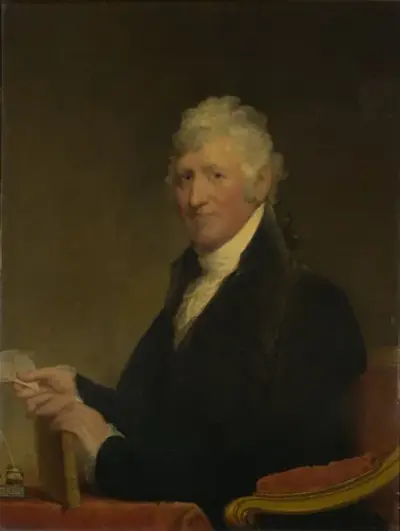
David Humphreys was an American Revolutionary War colonel and aide de camp to George Washington, a secretary and intelligence agent for Benjamin Franklin in Paris, American minister to Portugal and then to Spain, entrepreneur who brought Merino sheep to America and member of the Connecticut state legislature. A poet and author, he was one of the "Hartford Wits." He wrote the first sonnet known to have been written in America just about the time independence was declared.
