Recep Tayyip Erdogan Quotes
We have extradited terrorists to the United States in the past. And we expect the same thing to be done by the United States.
Erdogan, Recep Tayyip. Interview with CNN. CNN, 18 July 2016.


Islamic Religious Fundamentalist Terrorists in Algeria had kidnapped over 100 Western Hostages including some Americans. One of the terrorist’s “demands” was for the release of convicted murderers and terrorists in the United States. The official policy which she stated was not totally accurate. On several occasions, U. S. Officials or third parties representing them had “unofficially” negotiated with terrorists. In many cases this was a tactic to buy time and military action followed and in other cases unofficial ransoms were actually paid. The United States has had to contend with this problem with Islamic Terrorists and Pirates since the Thomas Jefferson Presidency when he argued against John Adams who wanted to pay the tribute while Jefferson preferred military action.


Terrorism even then put strains on traditional diplomacy where bombers would take sanctuary or raise money in countries whose diplomatic policy was opposed to terrorism of all types. At this particular time, Irish terrorists would raise money in the United States to support the terrorists bombing English targets.

This political issue has been in contention in every major world power since the Roman Empire. There has always been a division between hard liners and others. At issue is whether the nation should defend and or take up the cause of any national, individual, corporation, ideals even against a foreign country who may object to the behavior or use their own legal system to punish violators of their local laws. Failure to do so, they have argued over the years, makes the power appear weak and will invite further insult and transgressions. They claim that the government’s duty is always to protect its citizens from foreign elements regardless of whether the citizen’s behavior is right or wrong, reasonable or unreasonable, honest or dishonest. Also, this view holds that the nation should NEVER apologize as this makes it seem weak. These people have argued that it is the obverse of “My Country, Right or Wrong” and should be “Our Citizens, Right or Wrong”. On the other side, it is claimed that defending citizens or institutions that are clearly in the wrong not only is morally and ethically improper, but by being so indiscriminate, it weakens the nation’s power and credibility when it later wants to defend its citizens who are in the right and are being railroaded and discriminated against. And an apology, if the individual and institution has been in the wrong or caused harm and damage, is the proper thing to do and will often resolve matters and this is the best outcome often for the erring individual or institution. It is such a universal political issue of contention, that in the 2012 Presidential Campaign Mitt Romney had castigated President Barack Obama for apologizing to the African Nations for forcing their ancestors into American Slavery, even though Romney was very much opposed to slavery. It was the apology that makes America seem weak. The other side is that the apology shows that America has strong democratic principles and occasionally falls short, and when it does so, it acknowledges and corrects it setting a democratic example for all.


This is diplomatic language for a very stern warning. Pakistan supported terrorist organizations because 1) they used the terrorists as their proxies in their continuing conflict with India. The terrorists were a de facto asset of the Pakistani Intelligence Service. 2) Many Pakistani citizens were ultra-orthodox Muslims and believed in the religious objectives of the terrorists and even shared a religious belief in the propriety of the terrorist methods as long as they were being applied to non-Muslims or Muslim heretics. 3) Much of the militant infrastructure was in the tribal, frontier areas of the country where the government was relatively weak. 4) The militants had taken the position that if the Pakistan government tried to curtail their jihad efforts, then the government and its supports were heretical Muslims and were, under Sharia—Islamic Law—proper targets for their terrorism activities. The number of Pakistani Muslims that the terrorists murdered was far greater ironically than the American or European Christians and Indian Hindus that had been killed. A decade later, the Pakistani authorities were split over those who realized that the terrorists were most dangerous to the Pakistanis themselves—and especially the government officials—and those who believed that the terrorists should have continued support because of the 4 reasons above.
Azad Kashmir is that part of the disputed territory of Kashmir that was under Pakistan’s control, as opposed to the part of Kashmir that was under Indian Control.

He was Defense Minister at the time. This theme was picked up later by both Israel and the United States and after September 11, President George W. Bush made it official U. S. policy.

Harding however made no effort to ever implement any such association in his tenure.


There is one condition for us to have healthy relations with the United States. It's called respect.
This is an old and critical concept in American relations with the rest of the hemisphere which Simon Bolivar used to refer to as “respecto.” Americans tend to be relatively unconcerned by what other nations think of America, and since the US has been so successful, it has developed a strong national ego. Other nations, not so successful in modern times, tend to place a great deal of importance on the notion of respect. It is a major factor in most of the world.


Arguing against proposals to have the FBI apprehend terrorists in foreign countries against the wishes of the sheltering country


This quotation is used by some non Americans to illustrate a hypocrisy and double standard that they see the United States arguing for in dealing with terrorism. The PKK terrorists have been infiltrating from Northern Iraq (Kurdistan) into Turkey for years. Kissinger and most American leaders tried to dissuade the Turks from militarily moving into Iraq to cut off the terrorists there and deal the border. They preferred an international policy approach. However, after 9-11 when the U.S. mainland was attacked by terrorists, the United States not only reacted unilaterally, but invaded Afghanistan and Iraq supposedly to nullify the terrorists.
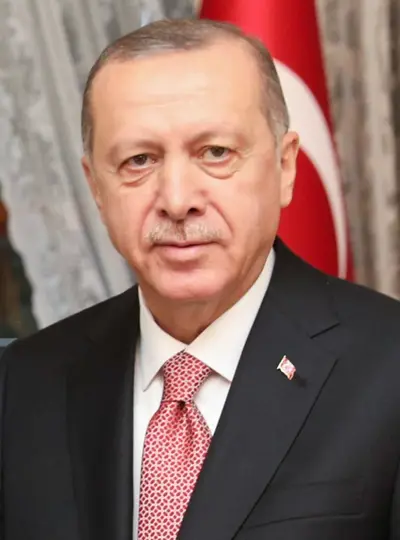
Recep Tayyip Erdoğan is a Turkish politician serving as the current President of Turkey. He previously served as Prime Minister of Turkey from 2003 to 2014 and as Mayor of Istanbul from 1994 to 1998. He founded the Justice and Development Party (AKP) in 2001, leading it to election victories in 2002, 2007, and 2011 before being required to stand down upon his election as President in 2014. He later returned to the AKP leadership in 2017 following the constitutional referendum that year. Coming from an Islamist political background and self-describing as a conservative democrat, he has promoted socially conservative and populist policies during his administration.
