Lyman Abbott Quotes
The question, Shall woman vote, if translated into actual and practical form, reads thus: Shall woman decide what are the rights of the citizen to be protected and what are the duties of the citizen to be enforced, and then are her son and her brother and her husband to go forth, armed, if need be, to enforce her decision? Is this where the functional line between the sexes is to be drawn? Are women to make the laws and men to enforce them? Are women to decree, and men to execute?
This illustrates some of the illogic of some of the opponents of female suffrage. The fear was so great, that the very thought of woman voting along with men becomes in his mind, women controlling the electoral process. Since women voted in America sometimes they have made the difference in an election and sometimes it was the men—most often it was neither as a bloc. Also, it never occurred to Abbot that women could possibly enforce the laws along with men or fight in the military if the voters decide on war. See {629405} for his rigid view. A logical fallacy of Abbot’s argument is that the same thing can be said of old men. If the decisions of the voters need enforcement or military action, the older men of the society will not be the ones to enforce the laws or fight in the wars. So according to Abbot’s defective logic, the older (or disabled) men should not be allowed to vote when they reach the stage in life that they can no longer fight in war or serve as a policeman.
Lyman Abbott, 1835–1922, Congregationalist theologian, editor, and author, “Why Women Do Not Want The Suffrage”, The Atlantic Monthly, September 1903
Sourced by: Eigen's Political and Historical Quotations

Without realizing it Abbott conceded some of the reasons that some people opposed women serving in the military. His entire argument hangs on the slender thread that it is not the function of a woman which was a view held by some people with particular religious and philosophical views. When that group was clearly shown to be a minority of Americans, women entered military service and joined police forces across the country.


Hunt gave as an example Mary Smith of Stanmore. This quotation is very interesting in the history of women’s suffrage. Hunt was a strong advocate for Universal Suffrage (See {616653}.) At the time, even men had to be a taxpayer and own a sufficient amount of property to vote. Less than 20% of the population of Britain were allowed to vote. The argument at the time was that the husband would represent the family’s interest at the ballot box and there was no need for women to vote. But by facing parliament with the logical inconsistency of its position, he was able to make his point, although there were very few women like Mary Smith who were single and had the economic resources to qualify. Most widows remarried so even if they had economic resources, there was a man who could assume the then perceived role of head of the household.


This was de facto Equal Rights legislation.


The speaker predicted the 19th Amendment to the Constitution, but was off by three years.


It would be over 30 years more before American women could vote for President. Lockwood never could.

Billinghurst was physically handicapped without the use of her legs. She protested and marched in protest parades using a hand propelled tricycle which the police sometimes dumped her out of and left her immobile in alleys.


She was the first presidential candidate's wife to admit such a radical position.


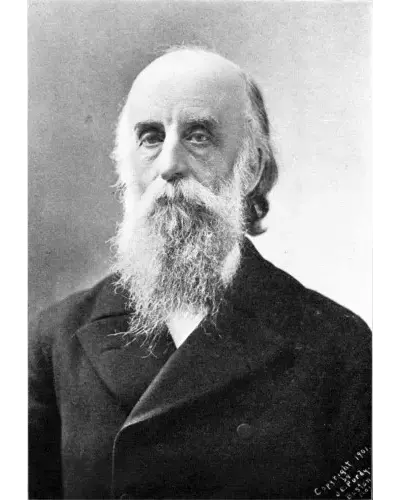
- Born: December 18, 1835
- Died: October 22, 1922
- Nationality: American
- Profession: Theologian, Pastor (Protestant), Editor, Author
