Barry Goldwater Quotes
The president refuses to say… refuses to say that the objective over there is victory.
War and international conflict had become very complicated in modern times. Americans and most other people associated victory in war with unconditional surrender. However, since the unconditional surrender is of WWII, no conflict has ended with an unconditional surrender.
Barry Goldwater, 1909-1998, U.S. Senator (Republican, AZ), Republican Nominee for President, Presidential Nomination Acceptance Speech, 1964
Sourced by: Eigen's Political and Historical Quotations

Podharetz was citing the Vietnam war. The two American occasions where the plausibility seemed to fade were the Vietnam War and The Irag war. Both Presidents Lyndon Baines Johnson and George W. Bush as Bismarck predicted, had much political trouble over the wars.


Nasser was indeed planning an attack. Israeli intelligence had discovered it, and the Israeli’s informed President Lyndon Johnson who in turn called Kosygin. Nasser and the Arabs had miscalculated again and ended up being not only defeated in the war they wanted but totally embarrassed by the incredibly poor performance of the Arab armies who greatly outnumbered the Israelis but had no stomach for a fight.

1st Earl Baldwin of Bewdley. Though members of the same Conservative Party, Churchill was a major opponent of Baldwin’s peace and “appeasement” efforts and publicly castigated Prime Minister Baldwin. Yet Baldwin, if he could not stave off war, wanted his critic to serve as Prime Minister if war was inevitable. Churchill never had much respect for Baldwin. See {626930}.


Ever since the end of WWII, no major war has been fought where there has been a classic victory where one nation is conquered by another and there is a surrender. Many of the wars have been fought against non-state actors or our war aim is a regime change or the establishment of a more friendly government. We have no desire to occupy the countries generally, and there is often no one “in charge” of the enemy who can even surrender. Bruce was referring to the Iraq War and the Afghanistan War. In each case, despite the lack of a surrender document, it can be said that America won both of these wars initially and then had great trouble with the occupation, the nation building, and keeping the peace. In Iraq and Afghanistan we suffered almost no casualties in the initial invasions. The occupation and “peace” is where we suffered almost all of our casualties.


Up to that time U. S. policy was to provide training and assistance to the South Vietnamese government and military, but not to attack the North. America had backed a corrupt and incompetent South Vietnamese government and Bundy and other policy makers were convinced that the North Vietnam would win, if the fighting and governing were solely left to the South Vietnamese. Johnson, who had resisted this policy for several weeks finally acceded. It was a major escalation of the Vietnam War.

After the attack on Fort Sumter, the South Sent “diplomats” to negotiation with the Government. Unfortunately for all, the South really was not open to negotiations as they only had two predetermined positions they would agree to: The first was that the Government should guarantee the perpetual right of states to have slavery if they wished and that fugitive slaves would be returned by the non-slave states. The second was that the Union should recognize the Confederacy as an independent nation and have peaceful relations between the two. The first was impossible to deliver even if the Union would agree to continue slavery, there was no way that the Federal Government could enforce the return of fugitive slaves from many northern states where they were free the second they set foot in the state, and the Northern states demanded States Rights and not being forced to return Fugitive Slaves forcing the Southern States to oppose States Rights when it came to Fugitive Slaves while favoring it for slavery itself. The Federal government could not enforce the Dred Scott Decision under the pro-South Buchanan administration. And Lincoln and most of the Northern Politicians would not accept a complete dissolution of the Union. There are no other possibilities the South would accept and there was really nothing to negotiate.


American official foreign policy had been officially isolationist—to not get involved in the squabbles and fights of other nations. Angell however pointed out that even before WWII, America had formally been involved in 6 foreign wars and used military incursions on foreign soil on almost 100 occasions.

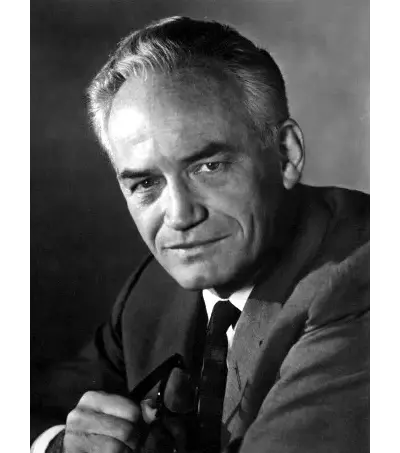
Barry Morris Goldwater was an American politician, statesman, businessman, United States Air Force officer, and author who was a five-term Senator from Arizona (1953–1965, 1969–1987) and the Republican Party nominee for president of the United States in 1964. Goldwater is the politician most often credited with having sparked the resurgence of the American conservative political movement in the 1960s. Despite his loss of the 1964 presidential election in a landslide, many political pundits and historians believe he laid the foundation for the conservative revolution to follow, as the grassroots organization and conservative takeover of the Republican party began a long-term realignment in American politics helped to bring about the "Reagan Revolution" of the 1980s. He also had a substantial impact on the libertarian movement.
