Jay Pierrepont Moffat Quotes
The President has now taken entire charge, his instructions are very brief and not clear, they are not issued with adequate knowledge of what has gone on before ...
In 1933 the incoming President, Franklin Delano Roosevelt, personally took charge of the U. S. delegation at the World Disarmament Conference in Geneva, much to the disappointment of professional diplomats at the State Department:
Jay Pierrepont Moffat, 1896-1943, U. S. Disarmament Negotiator, Hooker, The Moffat Papers: The Diplomatic Journals of Jay Pierrepont Moffat, 1956
Sourced by: Eigen's Political and Historical Quotations


Browder, had been prohibited by Court Order from touring the country during the 1940 Presidential Campaign. He personally blamed FDR although the Communist vote was so small that no matter where and how Browder campaigned it would not have made any difference. However, the court order gave Browder the opening leading some to believe that the communist following was larger than it was—why else would the establishment want to keep the campaign limited?

See {626594} for Polk’s negative view of delegation of any authority or responsibility.


FBI Director James Comey had testified that in his single one-on-one meeting with President Donald Trump, the President told him to cease the FBI investigation of his National Security Director. Trump however claimed that he was not giving Comy an order or instruction but was just making an informal suggestion. Trump then fired Comey who did not terminate the investigation and the National Security Director was found to have committed several felonies and turned states evidence and then pled guilty to one. Some accused President trump of trying to obstruct justice but the President claimed that he had just made a suggestion to Director Comey and he fired him for other reasons.

He was referring to the Controversial regulations issued in the 2nd week of the Truimp Administration.. It was the first acttion by President Trump that involved managment and operation of something. It was very badly handled where the epople who had to impliment it in many cases didn't have the same interpretation as the White House. And then the White hosue reversed their interpretation of various aspects when they realized that there were some unanticipated consequences. Not all the government employees agreed with the policy and the usual coordination throughout the government and there was no oppoprtunty for the middle managers to lead their subordinates in implementing the policy. As Baker observed, Government is very different from business and Trump never had any business experience. In American history, there had only been one other President was a wealthy and successful businessman--Herbert Hoover--and he had his difficulties.

Describing a meeting with President Franklin D. Roosevelt:

Ford was outraged about the President’s administration making rules and regulations to cope with the worst economic crash in American History. Former President Hoover had been voted out of office because philosophically he believed like Ford that the Federal Government should not be actively involved with private business and the economy. Some view regulation as meddling and interference while others see it as fulfilling its responsibility for the majority of citizens. See {642381} for Ford’s view of the Great Depression.


Mrs. Nixon put her foot down and the West Wing did not thereafter control and manage the affairs and staff of the First Lady.

Referring to Governor Franklin Delano Roosevelt—then contesting for the Democratic presidential nomination:


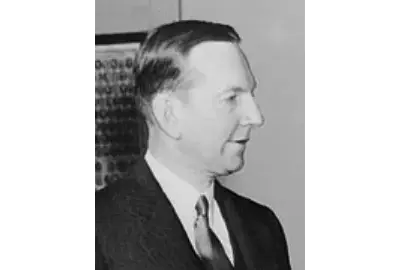
Jay Pierrepont Moffat was an American diplomat, historian and statesman who, between 1917 and 1943, served the State Department in a variety of posts, including that of Ambassador to Canada during the first year of U.S. participation in World War II.
