Elmer Davis Quotes
[Describing FDR:] ... a man who thinks the shortest distance between two points is not a straight line but a corkscrew.
Elmer Davis, 1890-1958, Journalist & Director, Office of War Information, Quoted in Martin, Ballots & Bandwagons, Rand McNally, 1964
Sourced by: Eigen's Political and Historical Quotations

Kennedy hated Roosevelt who had forced him to resign as the U. S. Ambassador to England. Kennedy was an admirer of Mussolini and Hitler. He had allied himself with the part of the British aristocracy that was pro Fascist and opposed Winston Churchill and the democratic element in Britain. Kennedy had opposed aid to Britain to fight Hitler and advised all who would listen that Britain could and would not stand up to Germany. Roosevelt’s support of Britain with Lend Lease and other means proved Kennedy wrong pragmatically and Kennedy’s own statements had forever proved him wrong morally. Although Kennedy opposed our entry in WWII, his sons did not. His oldest son volunteered for a very dangerous mission and was killed. Kennedy blamed his death on Roosevelt {616651} and forever after slandered FDR whenever he got a chance until his son Jack got into politics when his ambition for his son outweighed his hatred.


De Gaulle himself was a very difficult egomaniacal (personally and nationally) man. Roosevelt was one of the few leaders who could handle De Gaulle, although even he admitted the difficulty.


Patton always believed that Eisenhower wanted to be President. At the beginning of the war Patton was much senior to Eisenhower, but President Roosevelt promoted Eisenhower above many more senior generals. Eisenhower thought Patton the best fighting general in the army, but a public relations and administrative problem. Several times when he had gone too far, Eisenhower reprimanded him but kept him in his command position. After the fighting was over, Patton became the military governor of part of Germany and was not as successful at peacekeeping and nation building as he was at fighting. Eisenhower was convinced that Patton would destroy himself and get fired by the army command and the President if he continued as governor. Patton confused Eisenhower’s prudent and politic demeanor with the allies as a lack of courage. And Patton could never get over the fact that Eisenhower and never commanded an army fighting in the field. He was jumped to Supreme Allied Commander, in a very bold and brilliant stroke by FDR who passed over many senior generals.


Browder, had been prohibited by Court Order from touring the country during the 1940 Presidential Campaign. He personally blamed FDR although the Communist vote was so small that no matter where and how Browder campaigned it would not have made any difference. However, the court order gave Browder the opening leading some to believe that the communist following was larger than it was—why else would the establishment want to keep the campaign limited?


In December of 1940 President Roosevelt delivered a Fireside Chat calling for full aid to Britain. The senator described it as:


Eccles had been a wealthy Republican banker before masterminding much of the New Deal economic policies. He was pilloried by many of his fellow wealthy businessmen and financiers.

In an irony, the first President limited by a term limit amendment pushed by Republicans remembering FDR turned out to be fellow Republican Dwight D. Eisenhower.

Describing his first meeting Franklin Delano Roosevelt:


In 1933 the incoming President, Franklin Delano Roosevelt, personally took charge of the U. S. delegation at the World Disarmament Conference in Geneva, much to the disappointment of professional diplomats at the State Department:
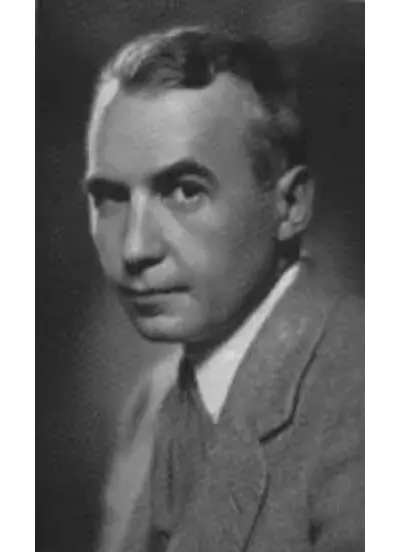
Elmer Holmes Davis was a news reporter, author, the Director of the United States Office of War Information during World War II and a Peabody Award recipient.
