Edward Snowden Quotes
The only way I could be extradited is through the principle of what my lawyers call "politics trumps law."
Snowden, Edward. "Edward Snowden: A 'Nation' Interview." Interview by Katrina vanden Heuvel and Stephen F. Cohen, The Nation, 28 Oct. 2014.


The minister had refused to be pressured by the George W. Bush Administration to sign an agreement with the US agreeing never to turn over an American or a foreign national working for America to the International Criminal Court (ICC). Even if a Peruvian or other non-American were working for an American Agency as an informant, agent, or other role, the country could not respect the treaty obligations that they had already made with regard to the ICC. Peru was “punished” losing $4 million aid. Nations were so “punished” while the State Department was spending huge sums to remedy negative opinion that so many nations had developed for the US during the George W. Bush administration. See {585493},65901 & {585496}, for more quotations on this. The US did not join the ICC Treaty as in some countries political considerations and different ethical values have labeled some American legitimate behavior as criminal and have attempted to hold individuals responsible for carrying out lawful orders. So many foreigners could understand the United States not wanting to deny Americans and others in the United States the protection of the United States Constitution, there was ire at the US pressuring others to boycott the ICC and break their existing treaties.

The issue was whether the Federal government could enforce a federal law against a citizen of a state if the state did not agree. There were some who argued that the State had the supreme authority over any citizen within the state. That view has been rejected and the Federal government may enforce its laws on anyone in any state regardless of the views of the state.


The highest court in New York.

In the early 18th century, the succession to the Scottish and English Crowns was unclear. As a safety valve and check, this clause was adopted by the Scottish Parliament. This was one of the most radical and anti monarchy laws ever passed. It took the unilateral power of making war and peace from the king & established the principle of ratification of ALL treaties. The law did not last long. It was nullified by the Union between England & Scotland (1707), and the English Parliament specifically repealed the clause in the “Repeal of Certain Scotch Acts of 1707”. This clause, which only remained in force for 3 years, had a profound effect on the modern democracies. The American founding fathers were totally familiar with the recent English history & this law. So the American’s at the Constitutional Convention of 1787, built the principle into the new Constitution giving the Congress the power to Declare War and the Senate to ratify treaties as a check against Presidential power.

This Government Instruction to British North African Consular Personnel summarized the policies of the British government with regard to British citizens who run afoul of the law while in Morocco and other North African countries. Essentially, the British almost always insisted on a treaty with the foreign governments that gave jurisdiction to the British Counsul to try any Englishman who was accused of a crime. The national government could not put a British Subject on trial of punish him regardless of the crime. Where local people were the victim of the alleged crime, the national government could send an observer to the trial that the British consul held. To many, this was arrogant and insulting to the host governments. As high handed as it seems, there were and still are great problems with differing concepts of justice, different rights protected and different levels of corruption. In many countries “important” local officials can control or influence the decisions of courts, witnesses can be easily bribed lie, and even judges can readily be bought. Even today, the issue of criminal jurisdiction is one of the most important subjects of negotiations between nations. The United States has similar agreements with Afghanistan, Iraq, Korea, Germany, Japan and other nations where we have armed forces. Generally, the better and more sophisticated and honest the host government justice system is, the more willing modern nations are to allow them jurisdiction over criminal matters. But generally, in the world today, these treaties are the exception. Most criminal jurisdiction is with the national government where the alleged crime takes place.

At the time, the Muslim nations of the Barbary Coast commonly seized merchant ships anywhere in the Mediterranean and other oceans. They would sell the cargos, enslave the Christian crews and passengers and then demand ransom for the ships and the freedom of the slaves. However, if nations paid each of the rulers of three countries--Morocco, Algeria & Tunisia--enough annual tribute, ships of the paying nation would not be molested. The European Maritime powers paid the tribute rather than go to war. However, this became a political controversy in the U.S. John Adams and many others wanted to pay the tribute. Jefferson and still others, argued that such tribute should never be paid and war was preferable. This treaty, negotiated by Donaldson and the Algerian Ruler, was a great victory for Jefferson as no tribute would be paid by the U. S.—the only country so exempted. However, it took an invasion of Tripoli lead by U.S. Marines and a massive naval bombardment of Algiers to ‘persuade’ the ruler of Algeria to sign the treaty. Later, the Barbary pirates reneged, and the U. S. did pay a tribute rather than have another war. They did however, pay less than the European powers.


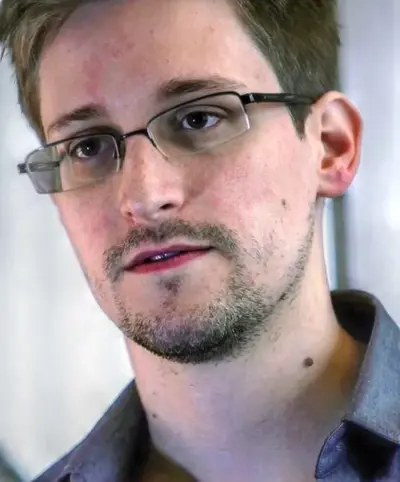
Edward Joseph Snowden is a former computer intelligence consultant who copied and leaked highly classified information from the National Security Agency (NSA) in 2013 when he was a Central Intelligence Agency (CIA) employee and subcontractor. His disclosures revealed numerous global surveillance programs, many run by the NSA and the Five Eyes Intelligence Alliance with the cooperation of telecommunication companies and European governments, and prompted a cultural discussion about national security and individual privacy.
