Alberto Fujimori Quotes
I have strongly rejected the proposal to pardon and transfer her to the United States. I do not have the legal power to pardon terrorists and even if I did, I would not use it.
Fujimori, Alberto. Press Statement. 1998, Lima, Peru.


The issue was whether the Federal government could enforce a federal law against a citizen of a state if the state did not agree. There were some who argued that the State had the supreme authority over any citizen within the state. That view has been rejected and the Federal government may enforce its laws on anyone in any state regardless of the views of the state.

The Security Counsel was meeting it the Situation room at the White House

The George W. Bush Administration attempted to avoid compliance with American Law and the Constitution by keeping captured terrorists in a Naval Base in Guantanamo, Cuba, and claiming that the American law did not there prevail. The Supreme Court twice ruled that the practices of the Administration in dealing with Terrorist prisoners violated the law and the Constitution. Meanwhile world public opinion was very opposed to the Bush Administration practices with captured war combatants which had never been attempted by any other administration. Finally President Bush in June of 2007 announced that Guantanamo would be closed.

Terrorism even then put strains on traditional diplomacy where bombers would take sanctuary or raise money in countries whose diplomatic policy was opposed to terrorism of all types. At this particular time, Irish terrorists would raise money in the United States to support the terrorists bombing English targets.


This is diplomatic language for a very stern warning. Pakistan supported terrorist organizations because 1) they used the terrorists as their proxies in their continuing conflict with India. The terrorists were a de facto asset of the Pakistani Intelligence Service. 2) Many Pakistani citizens were ultra-orthodox Muslims and believed in the religious objectives of the terrorists and even shared a religious belief in the propriety of the terrorist methods as long as they were being applied to non-Muslims or Muslim heretics. 3) Much of the militant infrastructure was in the tribal, frontier areas of the country where the government was relatively weak. 4) The militants had taken the position that if the Pakistan government tried to curtail their jihad efforts, then the government and its supports were heretical Muslims and were, under Sharia—Islamic Law—proper targets for their terrorism activities. The number of Pakistani Muslims that the terrorists murdered was far greater ironically than the American or European Christians and Indian Hindus that had been killed. A decade later, the Pakistani authorities were split over those who realized that the terrorists were most dangerous to the Pakistanis themselves—and especially the government officials—and those who believed that the terrorists should have continued support because of the 4 reasons above.
Azad Kashmir is that part of the disputed territory of Kashmir that was under Pakistan’s control, as opposed to the part of Kashmir that was under Indian Control.

He was Defense Minister at the time. This theme was picked up later by both Israel and the United States and after September 11, President George W. Bush made it official U. S. policy.


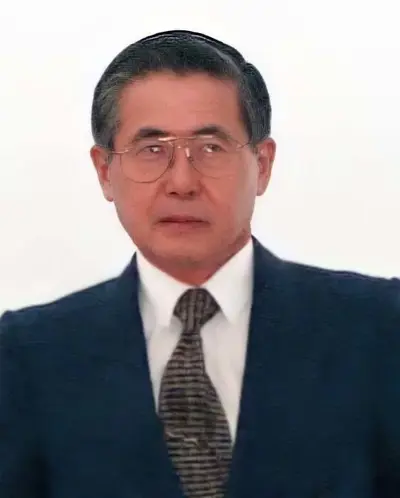
Alberto Kenya Fujimori Inomoto is a former Peruvian engineer and politician who served as the President of Peru from 28 July 1990 until his downfall on 22 November 2000. A controversial figure in Peruvian politics, his government is credited with the creation of Fujimorism, defeating the Shining Path insurgency and restoring Peru's macroeconomic stability. Fujimori ended his presidency by fleeing Peru for Japan amid a major scandal involving corruption and human rights abuses. Even amid his prosecution in 2008 for crimes against humanity relating to his presidency, two-thirds of Peruvians polled voiced approval for his leadership in that period.
