Bruno Latour Quotes
The only shibboleth the West has is science. It is the premise of modernity and it defines itself as a rationality capable of, indeed requiring separation from politics, religion and really, society. Modernisation is to work towards this.


At the time, Muslim clerics had a great deal of influence and in many cases legal control over all facets of Turkish society much as exists in other Islamic societies today. They even controlled what was taught in the schools. Remarkably, without bloodshed, Ataturk broke both the power and the influence of the clerics on all official and public activities. Many Turkish Muslims even developed a type of reformed Islam with the relationship between the individual and the clerics one of parity much like Protestant churches in the West. At the same time there was a more orthodox part of the population and while they sent their children to religious schools, they also attended public schools so even the orthodox Muslims in Turkey learned science and modern subjects which are still not taught in most Islamic schools and madrassas.
Public money had traditionally been spent to support shrines of Muslim saints. Ataturk ended such subsidies.


10 centuries ago was a time when the Arabs were far more advanced and modern than other cultures including the Christian West that was in the Dark Ages. However, in the 12th century there was a “closing”—a narrowing of allowable Islamic thinking, and since then, Islamic people have had great difficulty with change or modernity. Not all Muslim nations are equally rigid but the Arabs are at the extreme among Islamic counties.


The Ataturk reforms modernized Turkey and turned it into the most modern and democratic of the Islamic countries. However, there were always forces and populist governments that tried to erode the Ataturk reforms—especially secularism.


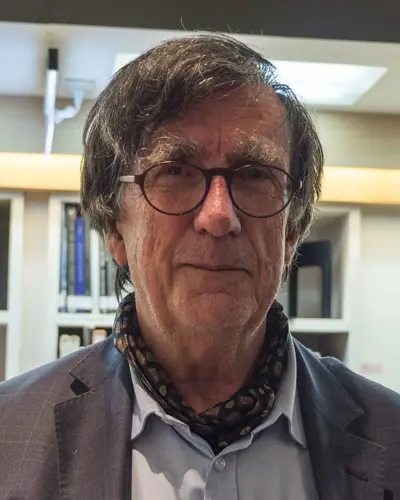
Bruno Latour is a French philosopher, anthropologist and sociologist. He is especially known for his work in the field of science and technology studies (STS). After teaching at the École des Mines de Paris (Centre de Sociologie de l'Innovation) from 1982 to 2006, he became Professor at Sciences Po Paris (2006–2017), where he was the scientific director of the Sciences Po Medialab. He retired from several university activities in 2017. He was also a Centennial Professor at the London School of Economics.
