Ulrich Beck Quotes
The basic assumption of the secular society is that modernity overcomes religion.
Beck, Ulrich. A God of One's Own. Polity Press, 2010.


There were several dynamics that contributed to the change. Younger Americans of all persuasions were much more tolerant than previous generations. A much larger proportion of Americans did not identify with any religion. The many Christian sects were very diverse and almost never presented a unified view of exactly what were Christian values for any issue. The tactics of the religious extremists had alienated many people from all religious efforts to shape, much less dominate, the norms and culture. Finally, the Courts and the Politicians began to take the separation of church and state much more seriously than and been the case in many past generations.

At the time, Muslim clerics had a great deal of influence and in many cases legal control over all facets of Turkish society much as exists in other Islamic societies today. They even controlled what was taught in the schools. Remarkably, without bloodshed, Ataturk broke both the power and the influence of the clerics on all official and public activities. Many Turkish Muslims even developed a type of reformed Islam with the relationship between the individual and the clerics one of parity much like Protestant churches in the West. At the same time there was a more orthodox part of the population and while they sent their children to religious schools, they also attended public schools so even the orthodox Muslims in Turkey learned science and modern subjects which are still not taught in most Islamic schools and madrassas.


The Ataturk reforms modernized Turkey and turned it into the most modern and democratic of the Islamic countries. However, there were always forces and populist governments that tried to erode the Ataturk reforms—especially secularism.

At the beginning of the 21st century there were substantial demographic changes in America which eroded the majority historically held in America by White Christians. A smaller proportion of the American population were identifying with any religion. At the same time that Blacks and Hispanics were a larger proportion of new immigrants than were whites. And those minority groups both had a fertility rate that was substantially grater than that of whites. The result was that in the early 21st century the white Christians were losing their majority status in America.

This quotation illustrated the extreme polarization between the current fundamentalist Muslims, and the Muslim modernists and the West. Kamal Ataturk, the great leader and stateman who is the father of modern Turkey, is castigated by the author for leading the new Turkish parliament to depose the Caliph – the civil and religious autocrat, one of whom reigned from after the death of Muhammad till his abolishment in 1924. Most of the rest of the world credits Ataturk with being one of the great leaders of all time—one who led a democratic revolution which transformed Turkey into the only Muslim secular democracy, requiring pubic secular European type education for all children, giving women the right to vote (before the U. S. even), adopting a European alphabet and dress, and outlook on life—creating most remarkably a total cultural revolution with virtually no loss of life. No revolutionary leader, before or since has led so extensive a political and cultural revolution, and it was a bloodless revolution. Turkey, into the 21st century, was by far the most powerful, industrialized, scientific and modern nation of Muslims in the world and others were far behind. Yet many Islamic theologian still castigate Atatork for his great achievements as being against the will of God.


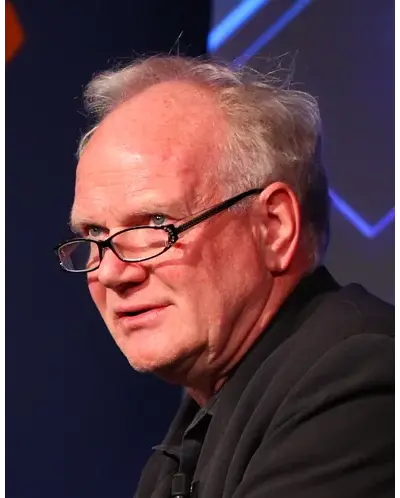
Ulrich Beck was a well known German sociologist, and one of the most cited social scientists in the world during his lifetime. His work focused on questions of uncontrollability, ignorance and uncertainty in the modern age, and he coined the terms "risk society" and "second modernity" or "reflexive modernization". He also tried to overturn national perspectives that predominated in sociological investigations with a cosmopolitanism that acknowledges the interconnectedness of the modern world. He was a professor at the University of Munich and also held appointments at the Fondation Maison des Sciences de l’Homme (FMSH) in Paris, and at the London School of Economics.
