Robert Finley Quotes
The object to which attention is to be exclusively directed, is to promote and execute a plan for colonizing (with their consent) the free people of color, residing in our country, in Africa, or such other place as Congress shall deem most expedient
Approximately 15,000 Blacks chose to emigrate.
Robert Finley, 1772–1817, Presbyterian Minister & Founder of the American Colonization Society, President, University of Georgia, Organizing Constitution, American Colonization Society,, 1816
Sourced by: Eigen's Political and Historical Quotations

More than a decade before the Civil War there were many proposals and plans for ending slavery in America without war. Many of these debates took place amongst major religious institutions. John Price Durbin, an eminent Methodist clergyman and former president of Dickinson College proposed one. His plan called for compensation to slaveholders and the relocation of the freed slaves to Africa—a form of ethnic cleansing. Brown disagreed with forced colonization to Africa. Instead, he suggested California as a voluntary option. Brown’s idea received about 9 months of serious consideration, but in January of 1848, gold was discovered in California and the Gold Rush was on. Black colonization of California was off the table.

See {625675}, {625686}, {625684}, {625682}, {625676} for additional quotations arguing for Black emigration.

Grant had negotiated for what is today the Dominican Republic to become a Black state where American Negroes could go. However, like Lincoln before him and most others arguing for Negro emigration, he underestimated the Negro desire to remain where they were and just be free with equal opportunity. See {625675}, {625686}, {625684}, {625683}, {625682} for additional quotations arguing for Black emigration.
_0_thumbnail_47x47.jpg "A portrait of Richard Allen, a Methodist bishop and founder of the African Methodist Episcopal Church")
Many whites thought that the solution to the problem of free and emancipated Negroes was to send them to Africa. They assumed that the negroes would by desirous of that solution also, but they rarely asked them. When they did, they received answers much like this one from one of the leading Black clergymen in America.

Abraham Lincoln in his famous eulogy to Clay in Springfield, IL, used this quotation.

Most free Blacks were not enthusiastic about the possibility of colonization. Those that were, wanted a colony in the Western part of America—not Africa or the Caribbean. See {613811}.

Lincoln early in his career had thought that voluntary Negro emigration would be a solution to the race problem in America. However, over time he lost his enthusiasm for this. Conversations with Black leaders had persuaded him that American Negroes had helped build this country and wanted their fair place in it. Hay thought that the idea was not only immoral but impractical and considered the suggestion always to be a proposed solution which would never be practically implemented. There were a few attempts and there was a society set up to encourage emigration. The Nation of Liberia was founded by returning American ex-slaves, but there has been friction between the descendants of the Americans and those of the natives ever since.

In 1862 the president requested a $600,000 congressional appropriation to finance a pilot program for Negroes freed by the Civil War to emigrate to Africa. He met with a delegation of Black leaders:

He led 88 Black Americans to colonize Africa as the first official U. S. Government colonization attempt in conjunction with the American Colonization Society.

This idea has been rejected by American Blacks from before the Civil War. There were many Black families that have been in America longer than Rockwell who always had the choice to go back to where they cam from if they were unhappy with America but they never did.

The response was supposedly to the President’s question of the feasibility of using the Navy to remove the Negro soldiers to another land. See {590147}. This quotation’s authenticity and accuracy are challenged by many scholars. The only source is the personal reminiscences of General Butler, a politician with Presidential aspirations who had his own agenda. The nuance of wording is very critical as to whether Lincoln was trying to accomplish export or whether he was asking Butler to staff out the feasibility so that Lincoln could deal with others who had raised the issue. There is no record of his having asked anyone in the Navy to staff out such a proposal, and the Secretary of the Navy at the time, Gideon Wells kept a detailed diary. Butler’s conclusion that 150,000 people could not be transported fast enough to exceed the breeding rate of those Blacks remaining also is challenged by many, especially if the Navy and the Merchant Service were both used. This casts even more doubt on the accuracy of the quotations.

Jefferson was referring to a plan then proposed and discussed to establish a colony in Africa which would be populated with free American Negroes and slaves when and if slavery could be ended. See Quotation xxx.

His ancestors had come to New Orleans from Haiti around 1800 before the United States made the Louisiana Purchase.
This quotation’s authenticity and accuracy are challenged by many scholars. The only source is the personal reminiscences of General Butler, a politician with Presidential aspirations who had his own agenda. The nuance of wording is very critical as to whether Lincoln was trying to accomplish export or whether he was asking Butler to staff out the feasibility so that Lincoln could deal with others who had raised the issue. Butler’s reply was that it was not feasible ({633655}), and there is no other record of the idea being advocated or implemented. The quotation, if indeed it was a quotations, is taken by some to indicate that Lincoln was no friend of Blacks and very racist to boot.

Fuller’s skills are corroborated by other documentation {610943} . Fuller would probably have been an “Idiot Savant”—a type of genius that is limited to a single field such as mathematics, art, etc. See {610913} and {594083} for more quotations regarding Black mathematical prowess.

The law went even further by requiring anyone employing a Black to have seen their certificate of freedom. This law in effect made slave escape to Ohio legally very difficult.
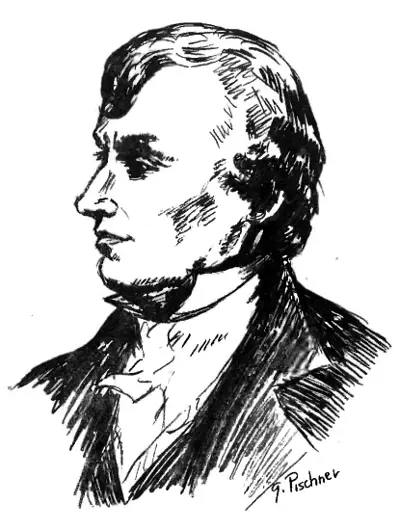
Robert Finley was an American clergyman and educator who is known as one of the founders of the American Colonization Society, which established the colony of Liberia in West Africa as a place for free American Blacks.
